Mérida Real Estate in 2026: Prices, Market & How to Buy
Median and per-m² prices by zone, what is pushing values up 6–10% a year — and the truth about the restricted zone that most guides get wrong.
On this page
- Is Mérida real estate still rising in 2026?
- How much does a house in Mérida cost in 2026?
- What is driving Mérida property prices up?
- Which zones of Mérida should buyers look at?
- Can foreigners buy property in Mérida?
- What rental income can you expect in Mérida?
- What are the risks of buying Mérida real estate?
- Should you rent in Mérida before you buy?
Is Mérida real estate still rising in 2026?
Yes. Mérida, Yucatán, Mexico enters 2026 with home values still climbing, and analysts tracking the market forecast appreciation of 6–10% a year depending on the zone. The median home in the city sells for about MX$4.2 million (≈US$240,000); the average runs higher, near MX$5.3 million (≈US$305,000), because the premium north pulls the mean up. Citywide, residential prices span MXN 22,000–42,000 per square meter (≈US$1,275–2,450), with new construction in the north commanding MXN 42,000–45,000 per m² (≈US$2,400–2,600).
Two caveats keep that headline honest. First, the peso is strong — about 17.3–17.5 to the U.S. dollar in mid-2026 — so dollar buyers get roughly 12–15% less house than they did in 2023; the bargain is real but smaller than the YouTube version. Second, growth is uneven: the north and the Centro renovation market move fastest, while some peripheral developments compete against heavy new supply. The zone-by-zone table below tells you more than any citywide average.
How much does a house in Mérida cost in 2026?
As of June 2026, the median Mérida home costs about MX$4.2 million (≈US$240,000), and entry points span an unusually wide range for one city: simple houses in the south start around MX$550,000 (≈US$32,000), family homes in Ciudad Caucel run MX$1.2–2.5 million (≈US$69,000–144,000), and Temozón Norte luxury reaches MX$40 million (≈US$2.3 million).
| Segment | Price (MXN) | ≈USD |
|---|---|---|
| Median home, citywide | MX$4.2M | US$240,000 |
| Average home, citywide (north skews it up) | MX$5.3M | US$305,000 |
| Residential price per m², city range | MXN 22,000–42,000 | US$1,275–2,450 |
| New north-Mérida condos and premium builds, per m² | MXN 42,000–45,000 | US$2,400–2,600 |
| Centro colonial, unrestored fixer | MX$2–4M | US$115,000–230,000 |
| Centro colonial, renovated | MX$5–12M+ | US$290,000–690,000+ |
| Ciudad Caucel house (west) | MX$1.2–2.5M | US$69,000–144,000 |
| South Mérida house (San José Tecoh and nearby) | MX$550,000–850,000 | US$32,000–49,000 |
| Temozón Norte, top of the market | up to MX$40M | up to US$2.3M |
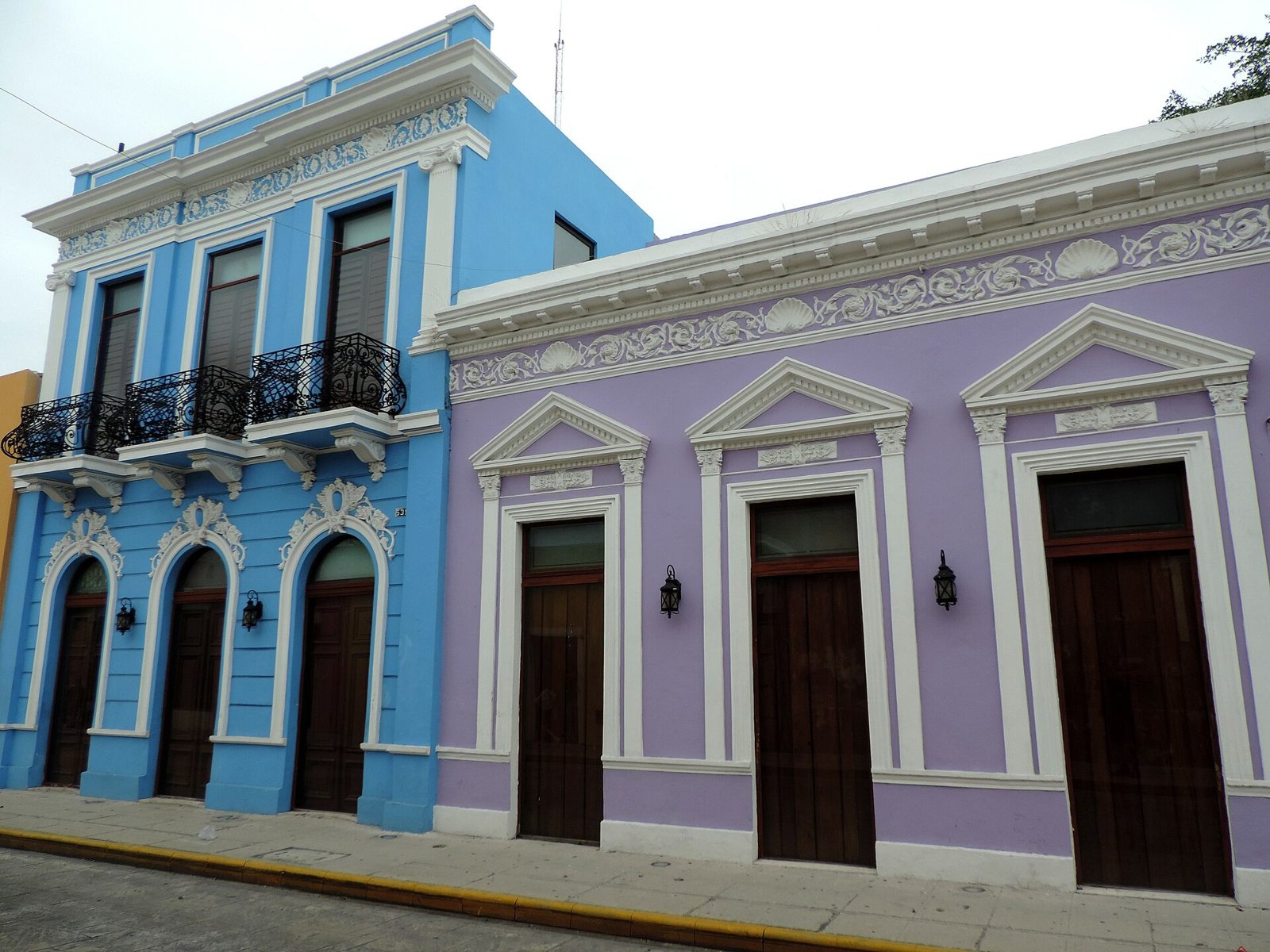
Centro is really two markets in one. Unrestored colonial fixers still surface at MX$2–4 million, but renovation in the historic core costs serious money and patience — permits, century-old walls, artisan labor — which is why finished colonials list at MX$5–12 million and beyond. The gap between those two numbers is the renovation budget, not a bargain waiting to be claimed.
Tip: listings increasingly quote pesos even to foreign buyers. At roughly 17.4 pesos per dollar, run every price through the conversion before you anchor on it — and remember the strong peso means your dollars buy 12–15% less house than in 2023.
What is driving Mérida property prices up?
Four demand engines push Mérida real estate: domestic migration, foreign buyers, nearshoring, and the Tren Maya. Families relocating from Mexico City and Monterrey — for safety, cost, and quality of life — are the largest force; foreign retirees and remote workers add dollar demand; nearshoring investment is lifting the whole southeast; and the Tren Maya runs up to six trains a day on the Cancún corridor from Mérida's Teya station, stitching the city into the peninsula's tourism economy.
Beneath all four sits the same foundation: safety. Yucatán holds the U.S. State Department's Level 1 advisory — Mexico's safest tier — and records roughly 100 crimes per 100,000 residents against a national average of 632 (see our safety guide). The city is also growing into the demand: metro Mérida counts about 1.26 million people, and Greater Mérida about 1.5 million across 14 municipalities — Mexico's tenth-largest metro. Developers have answered with a boom of privadas (gated communities) across the north, Cholul, and Conkal; that new supply is also where the market's main risk lives, covered below.
Which zones of Mérida should buyers look at?
Match the zone to the goal: Centro for colonial character and walkability, the north for new-build comfort and the deepest resale market, the west for value, the south for the lowest entry prices, and the coast for beach life. Character and price bands differ sharply across the city:
| Zone | Character | Typical 2026 prices |
|---|---|---|
| Centro & historic barrios | Colonial homes, walkable streets, the cultural calendar; gentrification pressure | Fixers MX$2–4M (≈US$115,000–230,000); renovated MX$5–12M+ (≈US$290,000–690,000+) |
| North (Temozón Norte, Cholul, Altabrisa, Montebello, Benito Juárez Norte, Montecristo, San Ramón Norte) | Privadas, malls, private hospitals, international schools | New builds MXN 42,000–45,000/m²; luxury to MX$40M (≈US$2.3M) |
| West (Ciudad Caucel) | Planned, affordable family neighborhoods; commuter life | MX$1.2–2.5M (≈US$69,000–144,000) |
| South (San José Tecoh and nearby) | The city's most affordable zone; fewer services | MX$550,000–850,000 (≈US$32,000–49,000) |
| Gulf coast (Progreso to Telchac) | Beach homes, snowbird and summer rhythms | Older from MX$2.5M (≈US$144,000) to MX$10M+ (≈US$575,000+) front line |
The north is where most foreign and upper-middle-class Mexican money lands — our north Mérida guide breaks down the colonias one by one — while Centro suits buyers who want the city's history underfoot (see the Centro neighborhoods guide). The south is where much of working Mérida lives: it offers the city's lowest prices, with fewer services and some low-lying streets that deserve a flood check before any offer. For the residential comparison across the whole city, start with best neighborhoods in Mérida; for the coast, see beach towns near Mérida.
Can foreigners buy property in Mérida?
Yes — foreigners can buy property anywhere in Mérida, with full rights to live in it, rent it, renovate it, sell it, and leave it to heirs. But the mechanics matter, because of a fact much of the internet gets wrong: all of Mérida lies inside Mexico's 50 km coastal restricted zone, so foreign buyers must hold residential property through a fideicomiso (a bank trust) or a Mexican corporation. There is no part of the city where a foreigner takes simple direct title.
“ALL of Merida is inside the 50 km restricted coastal zone (regardless of persistent gringo-rumors).” — Yucalandia, the long-running Yucatán legal-affairs resource
The rule comes from Article 27 of the Mexican Constitution, which reserves direct ownership of land within 50 km of any coastline (and 100 km of international borders) to Mexicans. The legal test is straight-line distance from the sea — not whether a city feels like a beach town — and Mérida's northern edge sits roughly 35 km from the Gulf at Progreso. The band reaches well past the city's southern limits too: Acanceh, a town 28 km south of Mérida, is still inside it.
So why does the “Mérida is outside the zone” myth survive? Partly because the city reads as inland — a colonial capital, not a resort — and partly because relocation blogs copy one another faster than they read the Constitution; several widely shared 2026 guides still repeat the error. The practical consequence of the truth is small: the fideicomiso adds setup and annual fees plus a permit from the Secretaría de Relaciones Exteriores, and it grants every ownership right that matters. Our step-by-step buying guide covers the process and the 2026 costs.
Watch out: if an agent or seller tells you Mérida is outside the restricted zone and you can skip the fideicomiso, they are wrong about the most basic legal fact of this market. Treat it as your cue to find new advisors.
What rental income can you expect in Mérida?
Long-term rental demand in Mérida is real and documented: a one-bedroom rents for US$400–700 a month outside Centro, US$700–1,100 in Centro, Santa Ana, or Santiago, and a furnished two-bedroom near Paseo de Montejo brings US$1,200–1,800 as of mid-2026. In the south of the city, simple houses rent for MX$2,500–4,000 a month (≈US$145–230). Short-term rental income is the murkier story — and we deliberately do not publish an “average Airbnb yield,” because honest numbers vary block by block and season by season.
Treat any projection skeptically for three reasons. High season concentrates in the cooler months — roughly late November through February — so occupancy sags in summer exactly when air-conditioning costs peak. Heavy AC use can push a property into CFE's DAC electricity tariff, roughly four times the subsidized rate, which quietly eats rental margins; our CFE electricity guide explains the trap. And short-term-rental regulation in Yucatán keeps evolving, so underwrite any purchase on long-term fundamentals rather than an optimistic nightly rate. Our renting guide shows what tenants actually pay across the city.
What are the risks of buying Mérida real estate?
Mérida's market risks are specific, and most are manageable with due diligence rather than avoidance. The big four in 2026:
- Oversupply pockets in privadas and presales. Developers have built thousands of similar units across the north, Cholul, and Conkal. A house identical to hundreds of neighbors competes against its own clones at resale and in the rental market — favor differentiated locations and finished, lived-in developments over renders.
- Ejido land. Some tempting land offers — especially beyond the periférico — sit on ejido (communal agricultural) tenure that cannot legally transfer to private buyers until it is formally regularized. Title verification through the notario is non-negotiable; walk away from any seller who resists it.
- Water, cenotes, and flooding. The city sits on porous limestone over a shallow aquifer. Low-lying streets in some colonias pond during the June–October storm season, and cenotes or soil voids can complicate construction. Visit after a hard rain, and commission soil and flood checks before buying land.
- Illiquidity. Mérida property sells in months, not days, and the resale market is younger than the construction boom that feeds it. Buy with a multi-year horizon and money you will not need back quickly.
Should you rent in Mérida before you buy?
Yes — for most newcomers, renting in Mérida for six to twelve months before buying is the highest-value decision in this guide. Renting is cheap relative to buying (US$400–700 a month for a one-bedroom outside Centro), it lets you trial different zones at low cost, and it keeps you flexible through the season that ends more relocations than any other: the April–September heat, when May afternoons reach 38°C and frequently pass 40°C.
A rental year also teaches what listings never show — which streets flood in September, where traffic stacks up at school pickup, which privadas feel like communities and which feel like inventory. Run the numbers with our cost of living guide and learn the local rental market in the renting guide first; the purchase will still be there, and you will negotiate it better.
Tip: if you can only test one month before committing, make it May — the hottest, hardest month. Buyers who still love Mérida in May buy with their eyes open.
Watch: voices from Mérida
Independent creators — not affiliated with Mérida Living.
Frequently asked questions
Can Americans buy a house in Mérida, Mexico?
Yes — citizens of any country can buy residential property anywhere in Mérida. Because the whole city sits inside Mexico's 50 km coastal restricted zone, foreign buyers hold title through a fideicomiso (a renewable bank trust) or a Mexican corporation rather than a direct deed. The trust grants full rights to use, rent, sell, and bequeath the property.
Is Mérida really inside the restricted zone? Other sites say it isn't.
It is — all of it. Article 27 of the Mexican Constitution restricts direct foreign ownership within 50 km of the coast, and Mérida's closest edge sits roughly 35 km from the Gulf; even Acanceh, 28 km south of the city, remains inside the band. Sites claiming Mérida is exempt are repeating a long-debunked rumor — no notario in the city will close a foreign purchase without the trust or a Mexican corporation.
How much does a fideicomiso cost in 2026?
Setup typically runs US$1,500–2,500 (≈MX$26,000–43,500) including the SRE permit, plus an annual bank fee of US$500–800 (≈MX$8,700–14,000). The trust lasts 50 years and renews for another 50. Our buying guide covers the mechanics step by step.
Why are houses in Mérida so cheap compared with the U.S.?
The headline bargains sit in zones built for local salaries: south Mérida houses run MX$550,000–850,000 (≈US$32,000–49,000) and Ciudad Caucel MX$1.2–2.5 million (≈US$69,000–144,000). The homes foreign buyers typically want — renovated colonials or north-side privadas — cost MX$5–12 million and up, and the strong peso has trimmed the dollar discount since 2023. Mérida is good value, not a fire sale.
Is Mérida real estate a good investment in 2026?
The fundamentals are genuine: forecasts of 6–10% annual appreciation, sustained migration from Mexico City and Monterrey, nearshoring, Tren Maya connectivity, and Mexico's safest-state backdrop. The honest caveats: oversupply pockets in new privadas, slow resale liquidity, peso–dollar exchange risk, and evolving short-term-rental rules. It rewards long horizons and punishes quick-flip math.
Can I get a mortgage in Mexico as a foreigner?
Rarely on terms North Americans would recognize — most foreign purchases in Mérida are cash. Peso mortgages mainly serve residents with Mexican income and credit history, developers offer staged payment plans on presales, and a handful of cross-border lenders market dollar products whose costs deserve a careful read. Budget as a cash buyer.
What is ejido land and why do buyers avoid it?
Ejido land is communal agricultural tenure created after the Mexican Revolution; it cannot legally be sold to private buyers — foreign or Mexican — until it completes a formal regularization process. Improperly “sold” ejido plots are the classic Yucatán land trap: the money leaves, the title never arrives. Have the notario verify tenure on any land purchase, especially cheap lots outside the city.
Are presales (preventas) in Mérida safe to buy?
They can be, but presales concentrate the market's biggest risks: delivery delays, late escritura (deed) handover, and resale competition from identical units in oversupplied developments. Vet the developer's completed projects, put delivery dates and penalties in the contract, and prefer privadas that are already largely built and lived-in over master plans on a render.
Sources & further reading
- Yucalandia — Yucatán real estate FAQ: the 50 km restricted coastal zone
- CCN Law — Mexico's restricted zone and foreign-ownership rules
- Constitución Política de los Estados Unidos Mexicanos, Artículo 27
- Secretaría de Relaciones Exteriores — fideicomiso permits
- The Latinvestor — Mérida property market data, 2026
- El Heraldo de México — Yucatán real estate coverage, January 2026
- Por Esto — Mérida housing price reporting, January 2026