Beach Towns Near Mérida: The Gulf Coast Guide
Forty minutes from the city, the Yucatán Gulf coast does quiet beach life at half the drama of the Caribbean — here's town by town, with prices.
On this page
What is the coast near Mérida actually like?
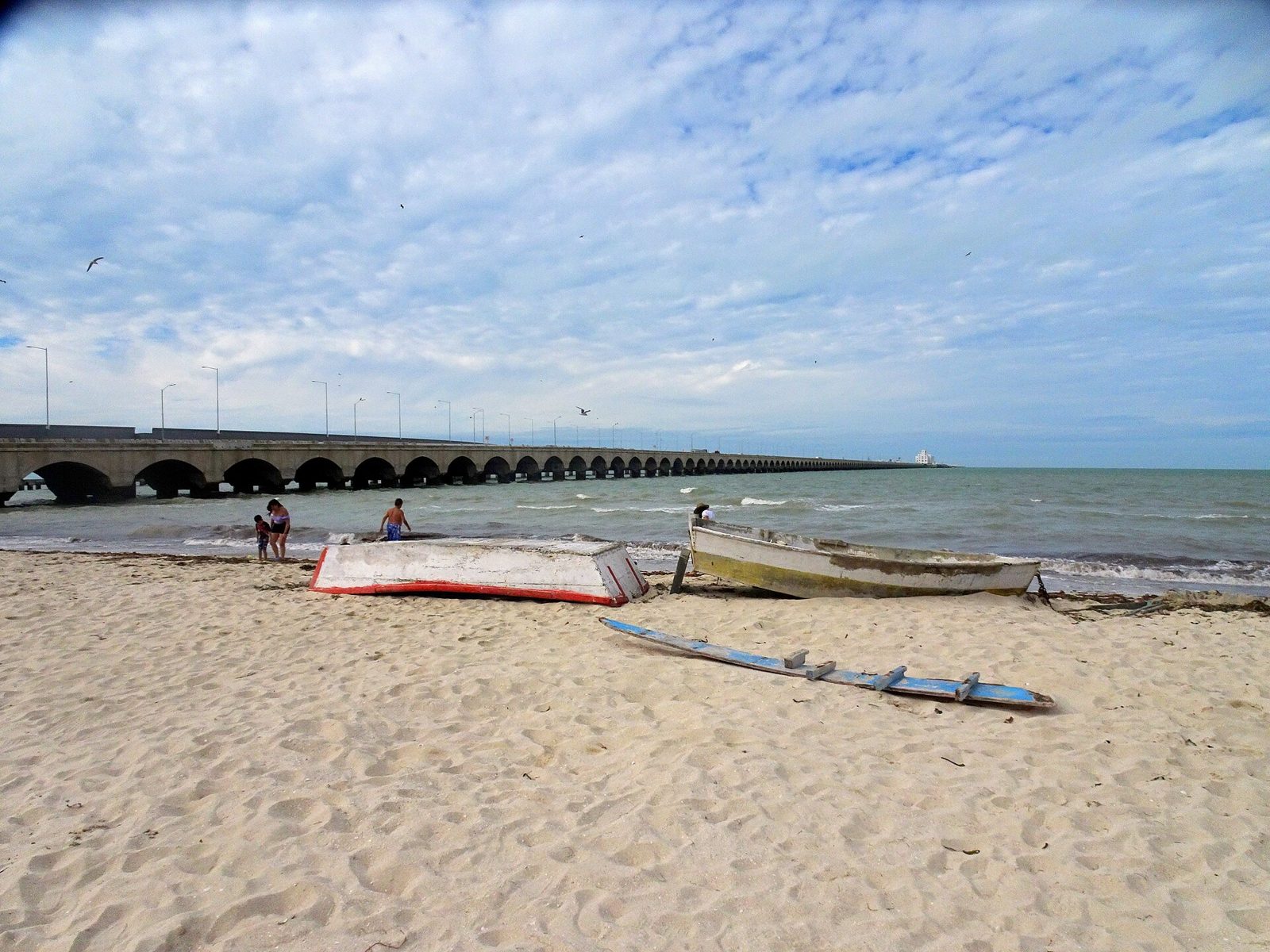
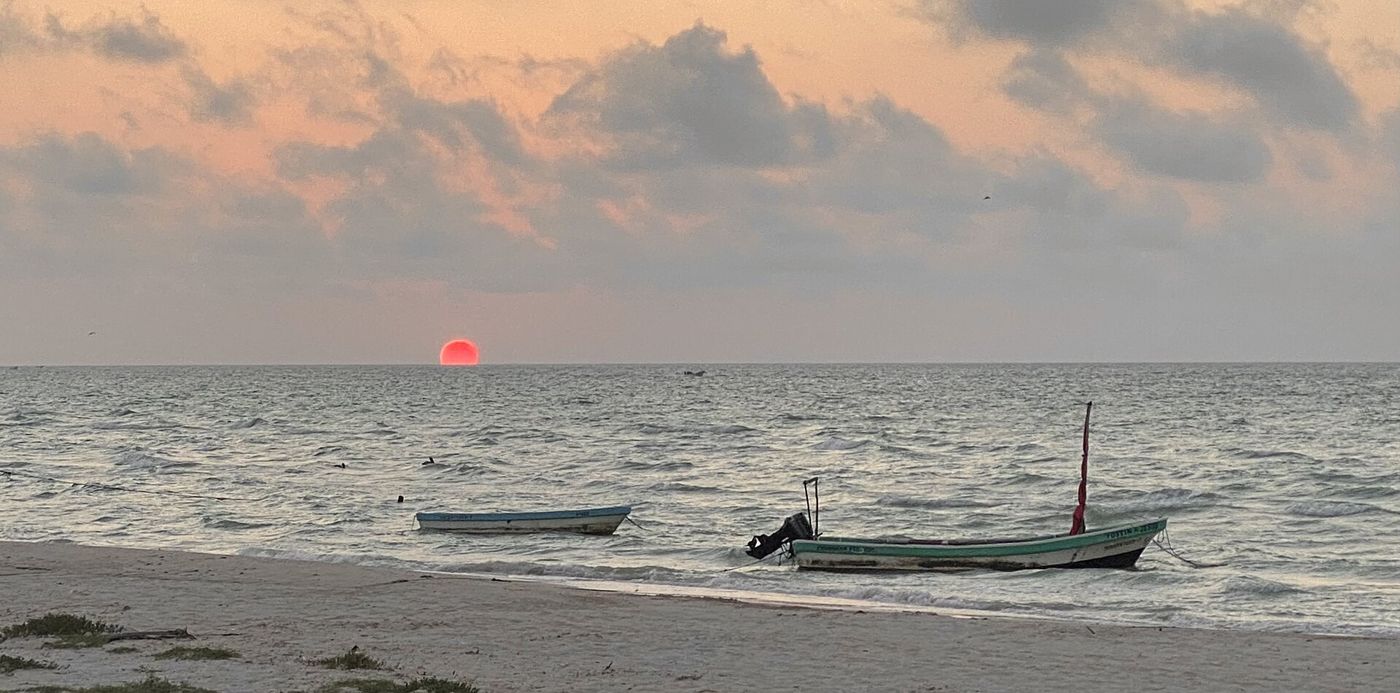
The Yucatán Gulf coast is flat, calm, and shallow — emerald-to-jade water over sand, not the turquoise postcard of the Caribbean, and all the better for long swims and longer walks. It's a coast of fishing towns and meridano summer houses rather than resorts: the busy season is local (July–August and Semana Santa, when Mérida decamps to the beach), and November–February brings snowbirds plus the freshest weather.
The trade against the Riviera Maya is simple: you give up Caribbean color and resort infrastructure; you gain calm, price, zero sargassum drama most seasons on this stretch, proximity to a real city — and sunsets over water.
Town by town: where to go (and live)
| Town | From Mérida | Character | Best for |
|---|---|---|---|
| Progreso | 35 km / ~40 min | Working port, long malecón, restaurants, services, cruise days | Year-round living with amenities |
| Chicxulub Puerto | ~45 min | Quieter Progreso neighbor; the asteroid-crater namesake | Beach houses with town access |
| Chelem & Chuburná | ~45–55 min | Fishing-village calm, lagoon birdlife, expat pocket | Quiet retirement by the water |
| Uaymitún → Telchac Puerto → San Benito | ~50–70 min | The east-coast strip: newer builds, emptier sand | New beach homes, weekend houses |
| Sisal | ~70 min | Pueblo Mágico west of everything; historic little port | Day trips, slow weekends |
Progreso is the anchor: the only town with full services (supermarkets, banks, clinics) and a direct bus to the city; its malecón has visibly upgraded through the 2020s. The further east you drive past Uaymitún toward Telchac, the emptier and newer it gets. Cruise-ship days bring crowds to Progreso's center — locals time their errands around the ship calendar.
What do beach houses cost in 2026?
Wide spread, honestly quoted: older houses a row or three back from the sand start around MX$2.5M (≈US$145k), solid renovated options cluster in the MX$4–7M band, and new beachfront construction runs MX$10M+ (≈US$575k+), with Telchac-corridor developments setting the pace. Lots still exist for self-builders — with the usual peninsula warnings about title (see due diligence below).
Rental dynamics matter too: summer (meridano season) and winter (snowbirds) are strong; September–October is dead quiet. Many owners cover costs renting July–August alone — but treat any agent's yield projection as marketing until you've stress-tested it.
Buying on the coast: fideicomiso, full stop
Whatever ambiguity people imagine about Mérida (there is none — the whole city is in the restricted zone), the beach has never had any: coastal property is the textbook case of Mexico's 50 km restricted zone, so foreign buyers hold title through a fideicomiso (≈US$1,500–2,500 setup, US$500–800/year) or a Mexican corporation.
Coastal due diligence extras: (1) Ejido land is rampant on this coast — buy only registry-titled private property your notario verifies. (2) Check the ciénaga side: lagoon-backed lots flood differently than beachfront. (3) ZOFEMAT — the 20 m federal maritime strip — belongs to the nation; confirm where the property line really ends. (4) Hurricane history and insurance quotes before, not after, the offer.
The honest reality of living at the beach
Salt and humidity eat houses: paint, hinges, appliances, and minisplits all live shorter lives, and maintenance is a permanent line item. Off-season is genuinely quiet — September in Chelem is for people who like their own company. Hurricane season (June–November) demands shutters, a plan, and insurance. Services thin out fast east of Progreso: many residents keep the city 40 minutes away as their hospital-supermarket-airport base.
That's exactly why the dominant expat pattern is city home + beach habit — or beach home + weekly city runs. You're not choosing between Mérida and the sea; the geography lets you have both. Compare with city living in the neighborhoods guide.
Just visiting? The beach as a day trip
Progreso works perfectly as a half-day: autobuses run constantly from Mérida (cheap, ~50 minutes), the malecón delivers seafood lunches with your feet in view of the water — pescado frito, ceviche, micheladas — and you're home for the evening serenata. Uaymitún's observation tower adds flamingo-spotting in season on the lagoon side. The full circuit lives in our day trips guide.
Watch: voices from Mérida
Independent creators — not affiliated with Mérida Living.
Frequently asked questions
Which beach town near Mérida is best to live in?
For year-round living with services: Progreso. For quiet at a fishing-village pace: Chelem or Chuburná. For new construction and empty sand: the Telchac corridor. Rule of thumb — the further from Progreso, the prettier and less practical.
How far is the beach from Mérida?
35 km to Progreso — about 40 minutes by car on the highway, or roughly 50 minutes on the frequent, inexpensive buses. The eastern strip (Telchac) runs 50–70 minutes.
Is the water nice? Be honest.
It's the Gulf: calm, shallow, warm, green-to-jade — excellent for swimming and walking, short of Caribbean-postcard blue. Seaweed events are far milder than the Riviera Maya's sargassum seasons. People who need turquoise should read the Mérida vs Playa comparison with open eyes.
Can foreigners own beachfront property here?
Yes — through a fideicomiso (50-year renewable bank trust with full ownership rights) since the coast is squarely in the restricted zone. Setup ≈US$1,500–2,500 plus US$500–800 annually. The federal ZOFEMAT strip (first ~20 m) is never private — verify boundaries. Process in the buying guide.
What does a beach house actually cost in 2026?
From ~MX$2.5M (≈US$145k) for older homes off the front row, MX$4–7M for renovated mid-market, to MX$10M+ (US$575k+) for new beachfront — Telchac-corridor new builds at the top. Add salt-air maintenance and insurance to the math.
Is hurricane risk a dealbreaker?
It's a managed risk, not a dealbreaker: direct hits are infrequent (Isidoro in 2002 remains the reference event), but June–November demands insurance, shutters, and respect. Concrete construction — the local norm — handles weather that would shred lighter builds.
Does Mérida, Mexico have beaches?
Not in the city — Mérida sits ~35 km inland — but its Gulf coast beaches are a 40-minute drive: Progreso (the main beach town with services and malecón), Chicxulub, Chelem, Chuburná and the quieter Telchac corridor. Calm, shallow, green-jade water; family-pleasant rather than Caribbean-postcard. This guide covers each town with 2026 prices.