Yucatecan Food: What to Eat in Mérida
This is not Tex-Mex and it's barely 'Mexican food' as outsiders know it — Yucatecan cooking is a Maya-Lebanese-Spanish hybrid with its own canon. Eat it in this order.
On this page
What makes Yucatecan food different?
Geography made Yucatán a culinary island: cut off from central Mexico for centuries and connected by sea to Cuba, New Orleans, and Lebanese migration, the peninsula built its own pantry — achiote (annatto), bitter orange (naranja agria), earth-oven cooking (the pib), turkey as a founding protein, and the habanero used as a condiment, not an ingredient. The result reads nothing like tacos-and-salsa expectations: it's aromatic, citrus-soured, slow-cooked, and mostly mild until you decide otherwise with the salsa spoon.
The canon: dishes you must order (and what they are)
| Dish | What it is | When/where it shines |
|---|---|---|
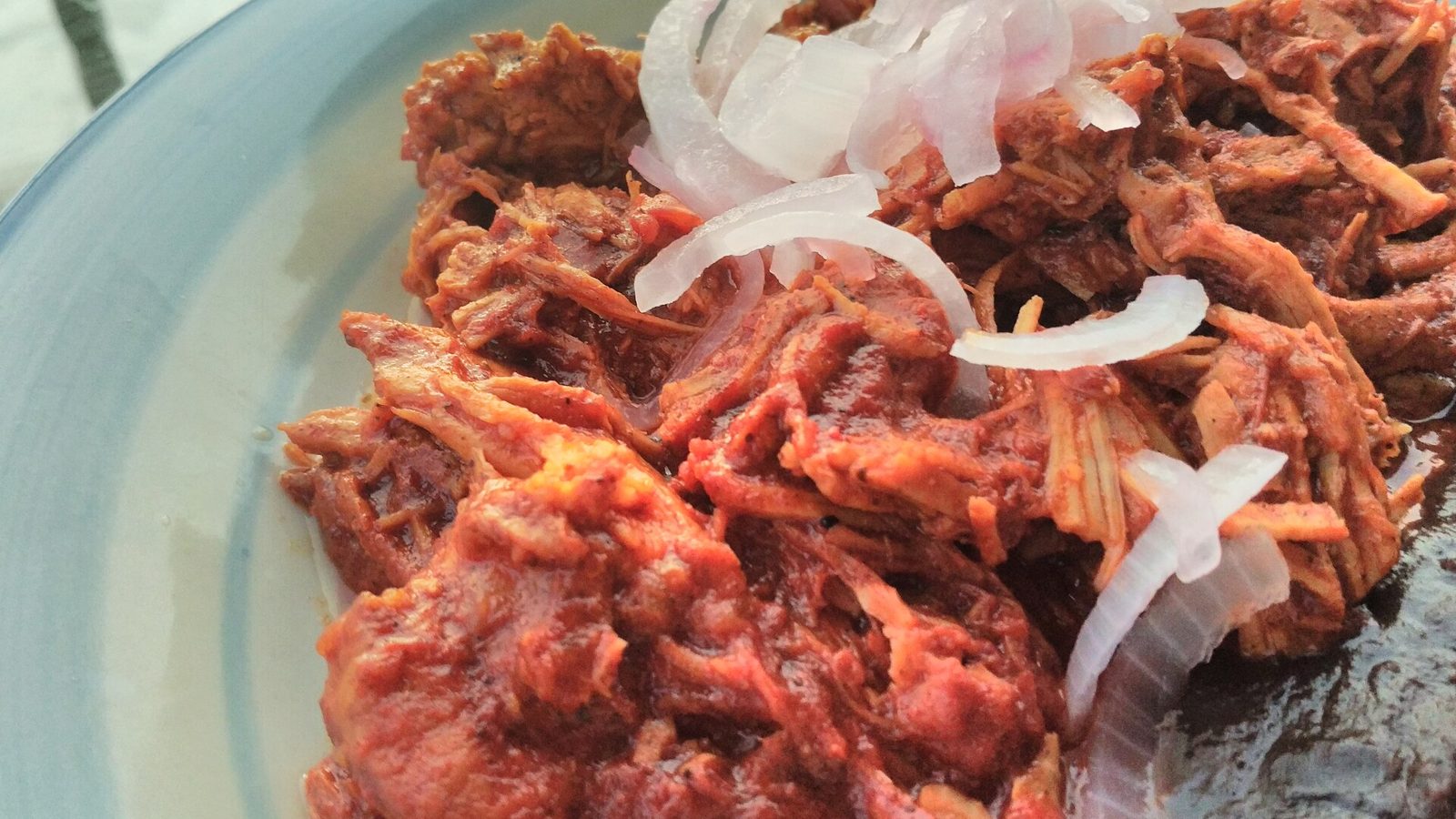
| Cochinita pibil | Achiote-marinated pork, slow-roasted in banana leaf; pickled red onion on top | Weekend mornings — torta or tacos at the market |
| Lechón al horno | Crisp-skinned roast suckling pig | Sunday taquerías; the crackling matters |
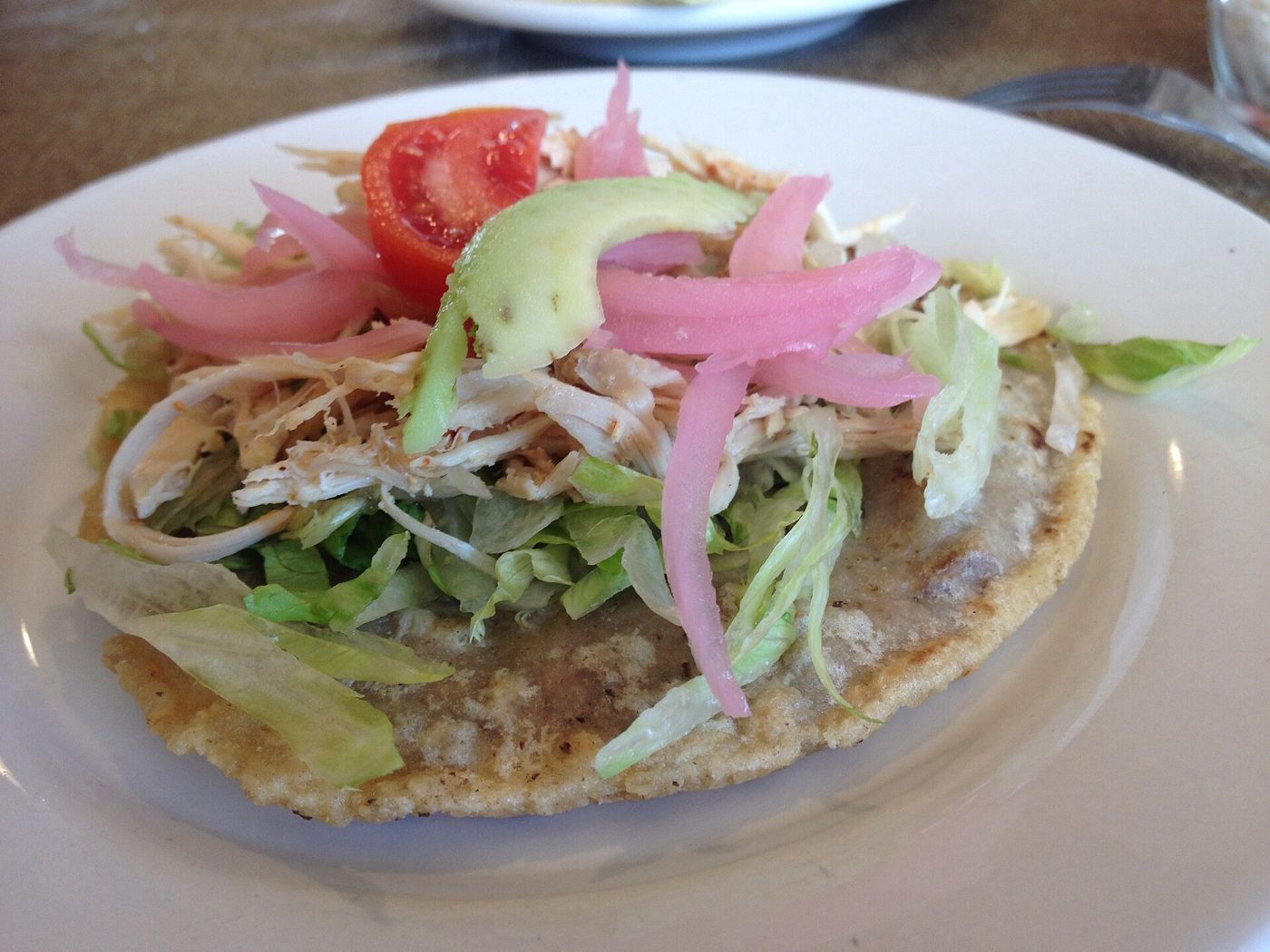
| Salbutes | Puffed fried tortilla + turkey/lettuce/onion | Evening snack culture |
| Panuchos | Same idea but bean-stuffed tortilla — richer | The salbut's serious sibling; order both, decide |
| Sopa de lima | Turkey-lime soup with fried tortilla ribbons | The starter that converts skeptics |
| Queso relleno | Hollowed Edam stuffed with picadillo, two sauces (k'óol + tomato) | The Dutch-cheese-via-trade-routes flex dish |
| Relleno negro | Turkey in charred-chile black recado — ink-dark, smoky | The acquired taste locals are proudest of |
| Poc chuc | Sour-orange grilled pork with charred onion | Country restaurants, lunch |
| Papadzules | Egg-stuffed tortillas in pumpkin-seed sauce | The great pre-Hispanic vegetarian dish |
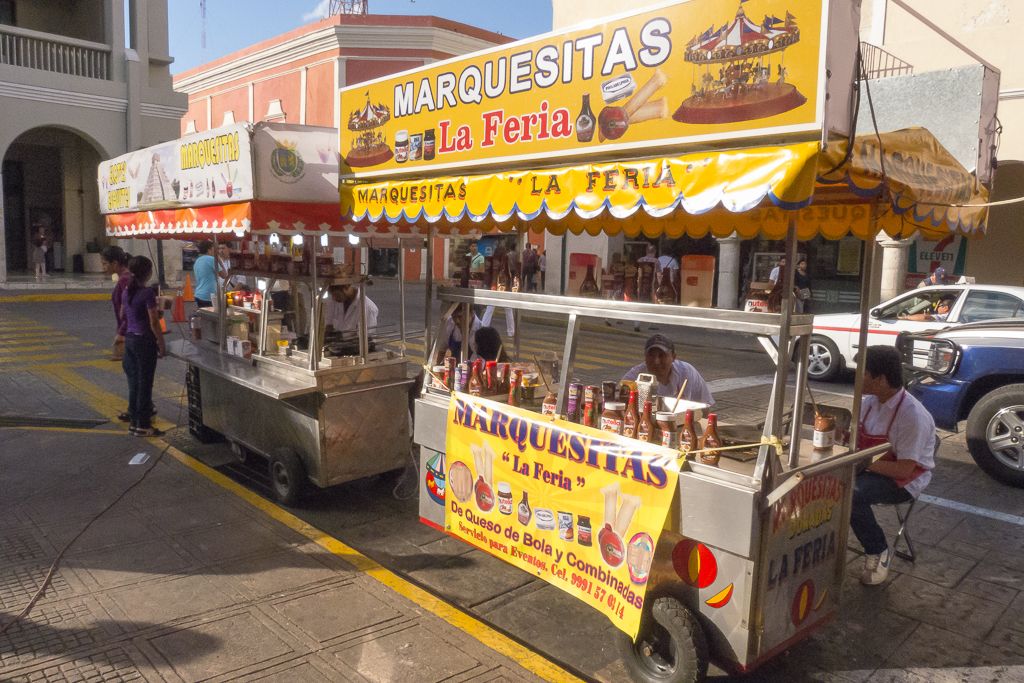
| Marquesitas | Crisp rolled crepe: Edam cheese + Nutella/cajeta | Plaza carts at night — sweet-salty genius |
| Dulce de papaya | Candied papaya with Edam | Dessert at traditional spots |
Habanero protocol: the fearsome chile arrives as salsa or whole on the side. Taste with a toothpick-tip first — Yucatecan habanero salsas range from 'bright' to 'memorable for days' — and never rub your eyes after handling one. The food itself is mild; the heat is opt-in.
Where to eat it: markets to fine dining
Markets first. Lucas de Gálvez and the Santiago market are the real school: cochinita tortas in the MX$35–60 range, fresh juices, and the city's working breakfast in full voice. Go hungry, go early, point at what looks good.
Taquerías and loncherías carry the daily canon — Santiago's beloved institutions (La Lupita is the name everyone trades) for cochinita and lechón; cocinas económicas for the home-style midday menú.
The classics: La Chaya Maya and Manjar Blanco are the polished, yes-touristy-but-genuinely-good rooms where every canon dish appears on one menu — right where a first-timer should calibrate. Mid-range dinners for two run MX$600–1,000.
The new wave: Mérida's fine-dining scene — Kuuk and Huniik are the flag-bearers — reinterprets Yucatecan ingredients at tasting-menu level, MX$1,500–2,500 per person, and books out; reserve ahead. It's among the most interesting regional fine dining in Mexico right now.
Street food and the daily rhythm
Yucatán eats on a schedule: cochinita is a morning food (the best stands sell out by 11), the big meal lands at 1:30–3, evenings belong to salbutes, panuchos, and the marquesita carts ringing the plazas. Sunday adds lechón and the post-Biciruta market crawl. Fall in with the schedule and you eat better for less — fight it and you'll wonder where all the cochinita went at 7 p.m.
Hygiene heuristics that locals use too: lines mean turnover, turnover means fresh; hot-and-made-in-front-of-you beats lukewarm-and-waiting; fruit you peel is fruit you trust. Budget note: dedicated street-food days run MX$150–250 total and are some of the best eating in Mexico (full money context in the cost guide).
What to drink
- Agua de chaya — the local 'tree spinach' blended with lime; Yucatán's green standard.
- Horchata de coco — the coconut variant worth crossing town for.
- Cervezas: Montejo is the hometown label; micheladas arrive serious here.
- Xtabentún — anise-honey liqueur from melipona-honey tradition; dessert in a glass.
- Pozol & pinole currents from the Maya pantry appear at markets — try when offered.
Vegetarian, vegan, and allergy notes
Traditional Yucatecan cooking is meat-forward, but the pantry rescues you: papadzules, brazo de reina and other chaya dishes, beans, plantains, and egg preparations are everywhere, and Mérida's modern café scene (Centro and north) handles vegan and gluten-free with city fluency. Two honest cautions: lard (manteca) hides in traditional masa dishes — ask; and peanut/seed allergies should flag pumpkin-seed sauces (papadzules, sikil p'ak) explicitly.
Frequently asked questions
Is Yucatecan food spicy?
The dishes themselves, almost never — heat lives in the habanero salsas served alongside, so you control every increment. The cuisine's base notes are achiote, sour orange, smoke, and slow-roasted depth rather than chile burn.
What's the difference between a salbut and a panucho?
Both are fried tortillas topped with (classically) shredded turkey, lettuce, tomato, and pickled onion. The panucho's tortilla is stuffed with refried black beans before frying; the salbut puffs empty and stays lighter. The correct answer is ordering one of each.
Where should a first-timer eat cochinita pibil?
At a market or morning taquería — Lucas de Gálvez or Santiago market stalls, or Santiago's institutions like La Lupita — in torta form with pickled red onion. Go before 11 a.m.; cochinita is a breakfast food and the good stands sell out.
How much should I budget for food in Mérida?
In 2026: street/market meals MX$60–120, cochinita tortas MX$35–60, a generous mid-range dinner for two MX$600–1,000, fine-dining tasting menus MX$1,500–2,500 per person. A delicious day costs less than a sad airport sandwich back home.
What is a marquesita?
Mérida's signature street dessert: a crisp rolled crepe filled with shredded Edam cheese plus your choice of Nutella, cajeta, or jam. The cheese is not optional — the sweet-salty crunch is the entire point. Find the carts around any plaza after dark.
Is the tap water / street food safe?
Drink bottled or filtered water (everyone does, including locals); eat street food using the universal heuristics — busy stands, hot food, peelable fruit. Mérida's street-food scene is well-trafficked and standards are high by any country's measure; ease in over your first days rather than marathoning on day one.