Best Neighborhoods in Mérida (2026): Where to Live
Every zone compared with mid-2026 prices and rents — from Centro casonas to Cholul privadas — so you can match a colonia to your life, not a brochure.
Map data © OpenStreetMap contributors — tiles load only when you activate the map.
On this page
- Which neighborhood in Mérida is best for you?
- Mérida neighborhoods compared: prices, rents, and fit
- Centro and the barrios: Santiago, Santa Ana, San Sebastián
- The Paseo de Montejo corridor and the Remate
- García Ginerés, Itzimná and Colonia México: the balanced middle ring
- The north premium belt: Montebello, Altabrisa and company
- Temozón Norte, Cholul and Conkal: the privada belt
- Ciudad Caucel, Las Américas and the value map
- Should you rent or buy first in Mérida?
- How to choose: a five-step field test (and the honest trade-offs)
Which neighborhood in Mérida is best for you?
The best neighborhood in Mérida, Yucatán, Mexico depends on your life stage more than your nationality or budget. Want walkable colonial culture? Choose Centro or its barrios, Santiago and Santa Ana. Want a leafy balance of local life and convenience? García Ginerés, Itzimná, or Colonia México. Family, space, and short school runs? The Temozón Norte–Cholul–Conkal privada belt. Maximum house for your peso? Ciudad Caucel or Las Américas.
One thing you do not need to optimize for is safety. Yucatán carries the U.S. State Department's Level 1 advisory — Mexico's safest tier, shared only with Campeche — and the city records roughly 100 crimes per 100,000 residents against a national average near 632. Choosing a colonia in Mérida is about services, noise, heat management, flooding, and commute times, not danger. That changes the whole decision: you are free to pick on lifestyle.
This guide compares every major zone with mid-2026 prices, then profiles each one. For street-level detail, continue to the deep dives on Centro and its barrios and north Mérida and the privadas.
Mérida neighborhoods compared: prices, rents, and fit
Across Mérida, residential prices span roughly MX$22,000–42,000 per m² (≈US$1,275–2,450), the median home sells for about MX$4.2 million (≈US$240,000), and forecasts point to 6–10% annual appreciation depending on zone, as of mid-2026. The table below compresses every major zone into one view — buy bands, rent bands, car dependence, and who each area actually suits.
| Zone | Vibe | Typical buy price | Typical rent | Car needed? | Best for |
|---|---|---|---|---|---|
| Centro core (Plaza Grande) | Colonial showpiece, tourist buzz | Fixers MX$2–4M; renovated MX$5–12M+ | 1BR US$700–1,100; 2BR furnished US$1,200–1,800 | No | Culture-first walkers |
| Santiago & Santa Ana | Renovated barrios, a market and park apiece | Fixer and renovated bands as Centro core | 1BR US$700–1,100 | No | Expats who want neighbors, not hotels |
| San Sebastián & La Ermita | Local, up-and-coming south Centro | Fixer territory, MX$2–4M | Below prime-Centro rates | No | Budget renovators |
| Paseo de Montejo corridor | Mansion avenue, cafés, the Remate | Top of the MX$5–12M+ band | 2BR furnished US$1,200–1,800 | No | Polished walkable living |
| García Ginerés | Leafy mid-century, Parque de las Américas | Mid-band of MX$22–42k/m² | 1BR US$400–700 | Helpful | Local–international balance |
| Itzimná, México & Benito Juárez Norte | Quinta charm, restaurant belt | Mid-to-upper band | 1BR US$400–700 | Helpful | Settled professionals |
| Montebello, Montecristo, Campestre, Altabrisa | Premium north, malls and hospitals | New builds MX$42–45k/m² | 1BR US$400–700, modern stock at the top | Yes | Comfort-first movers |
| Temozón Norte | New-build premium, design houses | Up to MX$40M at the top end | Houses dominate; rents vary widely | Yes | Space and architecture budgets |
| Cholul & Conkal | Privada belt, international schools | Wide privada range below Temozón | Family houses; little 1BR stock | Yes | Families with school runs |
| Ciudad Caucel & Las Américas | Volume new builds, young families | MX$1.2–2.5M in Caucel; Las Américas a similar entry band | Among the city's lowest | Yes | First homes, value hunters |
| South colonias (San José Tecoh and neighbors) | Working Mérida, deep local life | MX$550,000–850,000 | MX$2,500–4,000/month | Bus or car | Tight budgets, full immersion |
Rent bands are mid-2026 figures; furnished, dollar-listed units sit at the top of each range. See the renting guide for lease norms and the cost-of-living breakdown for full budgets.
Centro and the barrios: Santiago, Santa Ana, San Sebastián
Centro is the right choice when walkability and culture outrank quiet: it is the largest colonial historic center in the Americas after Havana, and daily life happens on foot among casonas, plazas, and markets. The cost of entry as of 2026: unrestored casonas run MX$2–4 million (≈US$115,000–230,000), renovated homes MX$5–12 million and up (≈US$290,000–690,000), and a one-bedroom rents for US$700–1,100 a month (≈MX$12,200–19,100).
Santiago and Santa Ana are the barrios most renovators target — each pairs a market with a park, Santa Ana skewing gallery-and-café polished toward Paseo de Montejo, Santiago slightly more local with serious taquería credentials. San Sebastián and the corridor toward La Ermita sit deeper south: more Mérida-as-it-was, fewer foreigners, and the city's most interesting up-and-coming restoration streets. The honest ledger: stone streets store and re-radiate the April–September heat well into the night, event noise is constant by design, and century-old houses ask for ongoing maintenance.
Tip: Centro is really five or six micro-markets, not one. The Centro barrios deep dive walks Plaza Grande, Santa Ana, Santiago, La Mejorada, and the Ermita corridor block by block.
The Paseo de Montejo corridor and the Remate
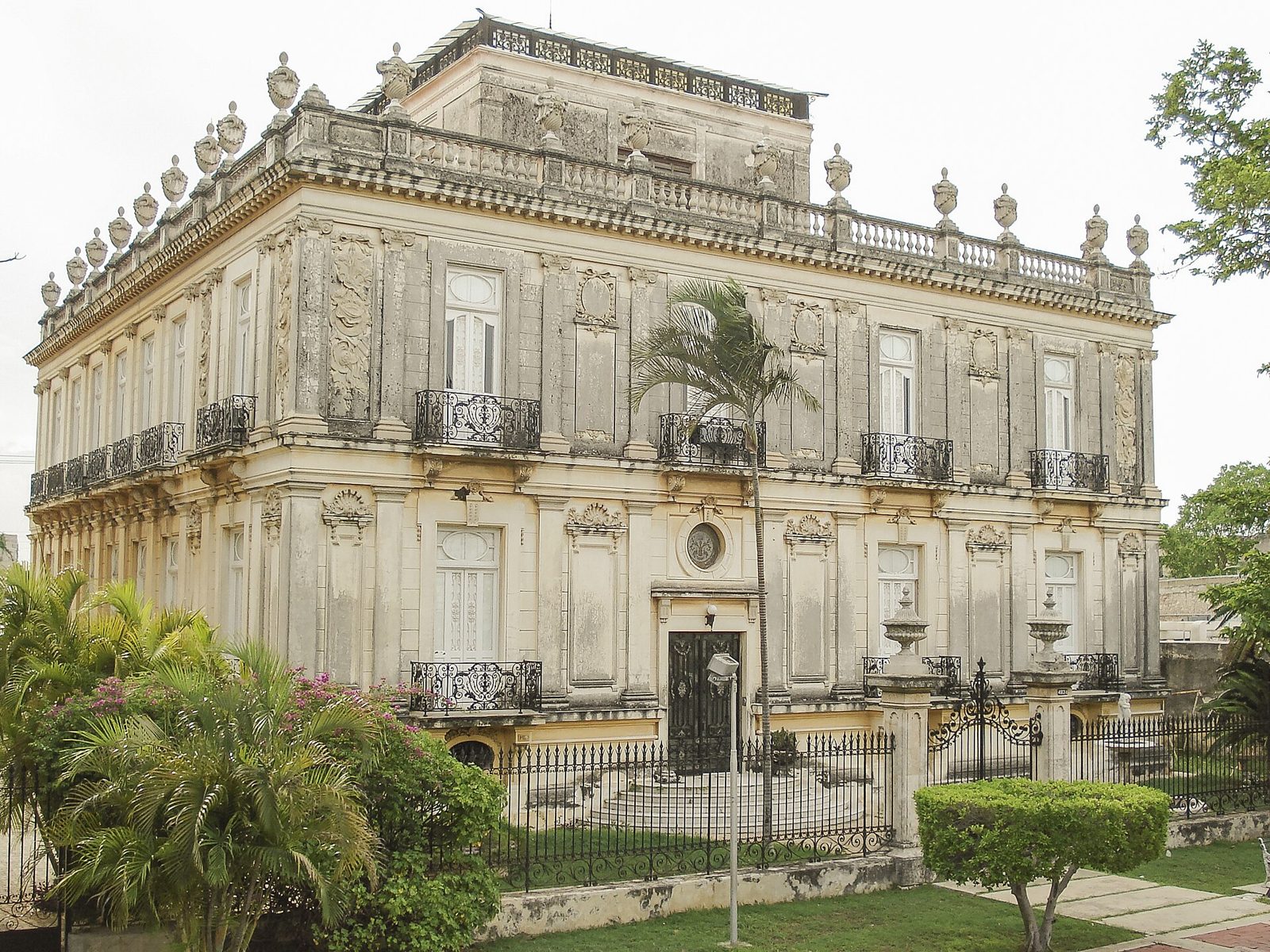
The Paseo de Montejo corridor suits people who want Centro's walkability on a grander, greener stage: the avenue's mansions now house cafés, banks, and museums, and the Remate — its southern head — hosts weekend events and the Sunday Biciruta, when the boulevard closes to cars for cyclists. Living here means morning espresso among the mansions, at corridor prices.
Housing on and just off the avenue tops Centro's ranges: renovated properties price at the upper end of the MX$5–12 million-plus band, and a furnished two-bedroom rents for US$1,200–1,800 a month (≈MX$20,900–31,300) as of mid-2026. Renters who want one polished, walkable year in Mérida before committing to buy anywhere often start exactly here — the renting guide covers how these dollar-listed units are priced and negotiated.
García Ginerés, Itzimná and Colonia México: the balanced middle ring
For the best all-around compromise in Mérida — green streets, central position, real neighborhood life, no tourist economy — the middle ring of García Ginerés, Itzimná, Colonia México, and Benito Juárez Norte is hard to beat. These colonias sit in the middle of the city's MX$22,000–42,000 per m² range (≈US$1,275–2,450), with one-bedroom rents of US$400–700 a month (≈MX$7,000–12,200) as of mid-2026.
García Ginerés is the leafy mid-century classic anchored by Parque de las Américas, with a beloved mix of long-time meridano families and settled expats. Itzimná keeps old quinta charm — big lots, mature trees, a quiet church plaza — minutes from the north's services. Colonia México and Benito Juárez Norte are the established middle-upper neighborhoods with one of the city's best restaurant belts. A car is helpful here, though not mandatory the way it is farther north: these streets still walk and bike reasonably, and crosstown Ubers run MX$50–150 (≈US$3–9).
The north premium belt: Montebello, Altabrisa and company
The north premium belt — Montebello, Montecristo, Campestre, San Ramón Norte, and the Altabrisa district — is modern-city Mérida: this is where the major private hospitals, the Altabrisa, La Isla, and Galerías malls, and most new offices cluster. People pick it for friction-free comfort — parking, air-conditioning, services within ten minutes.
It is priced accordingly. New construction in the premium north reaches MX$42,000–45,000 per m² (≈US$2,400–2,600), the top of the city's range, and the citywide average sale price of MX$5.3 million (≈US$305,000) skews upward precisely because of this belt. Established streets in Campestre and Montebello offer mature trees and larger lots than the newer privadas farther out; Altabrisa trades charm for sheer practicality, especially for anyone organizing life around a hospital. A car is assumed. Area-by-area profiles continue in the north Mérida guide.
Temozón Norte, Cholul and Conkal: the privada belt
Families wanting space, pools, and short school runs should look at the privada belt: Temozón Norte for new-build premium, Cholul and Conkal for more house per peso and village texture. Privadas — gated communities with controlled access and shared amenities — dominate new construction here, and the international-school cluster runs along the same corridor, the single biggest reason families with kids land in this belt.
Temozón Norte is the prestige address, with luxury homes reaching MX$40 million (≈US$2.3 million) at the top end per January 2026 market reporting; Cholul and Conkal deliver larger lots for less around still-working village cores. Two honest notes. First, privada life comes with homeowner-association-style maintenance fees that vary widely with the amenity package — get the fee schedule and its increase history in writing before signing anything. Second, the construction boom has produced presale oversupply pockets in parts of this corridor, a live debate in local market coverage — established, mostly occupied privadas are the safer bet. The north Mérida deep dive explains privadas in detail, and the schools guide maps the education belt.
Ciudad Caucel, Las Américas and the value map
The most house per peso in new construction is in the west and northwest: Ciudad Caucel's houses sell for MX$1.2–2.5 million (≈US$70,000–145,000) per January 2026 reporting, with Las Américas offering a comparable entry-level band in the city's northwest. Both are volume developments full of young Mexican families — practical grids of two- and three-bedroom homes, schools, and supermarkets, far from any tourist circuit and entirely car-oriented.
South of Centro, colonias like San José Tecoh are where much of working Mérida lives: houses run MX$550,000–850,000 (≈US$32,000–49,000) and simple rentals MX$2,500–4,000 a month (≈US$145–230). These areas have fewer services and longer commutes — and some low-lying blocks flood in storm season — but they are established, family-rooted neighborhoods, not no-go zones; in a Level 1 state, the difference is infrastructure, not safety. Buyers at every price point should flood-check specific streets during the June–October rains before committing.
Should you rent or buy first in Mérida?
Rent first — three to six months minimum, ideally spanning the April–June heat. Mérida's zones feel completely different at street level than on listing sites, and rents make testing cheap: US$400–700 a month for a one-bedroom outside Centro, US$700–1,100 inside it, as of mid-2026.
When you do buy, know two structural facts. All of Mérida sits inside Mexico's 50 km coastal restricted zone — despite a persistent rumor to the contrary — so foreign buyers hold title through a fideicomiso (bank trust) or a Mexican corporation. And closing costs total roughly 4–7% of the purchase price once notary fees, transfer tax, and trust setup are counted. With appreciation forecasts of 6–10% a year rewarding patience over haste, start with the market overview, then the step-by-step buying guide.
How to choose: a five-step field test (and the honest trade-offs)
Choose a Mérida neighborhood by testing it in person against your real routine — not by photos or Facebook-group votes. The five steps below catch the problems people most often discover only after moving in.
- Rent in your target zone for three months before buying anything — long enough to learn the street's rhythms, the neighbors, and the Sunday noise.
- Visit at 3 p.m. in May, when afternoons hit 38°C and frequently top 40°C. If a colonia — or an un-air-conditioned casona — works for you then, it works year-round.
- Ask for the property's CFE history. Mérida is on tariff 1C, and crossing 850 kWh in a two-month billing cycle trips the DAC rate at roughly four times the subsidized price. A previous occupant's bills tell you what the house really costs to cool — details in the CFE guide.
- Count Uber minutes, not kilometers, from the front door to your gym, school, office, and favorite restaurants. Crosstown rides cost MX$50–150 (≈US$3–9), but 40 minutes each way erodes any neighborhood's appeal.
- Flood-check the block during the June–October rainy season — ask neighbors where water pools and look for stain lines on walls and curbs.
Watch out: every zone charges its own tax. Centro charges in noise, heat, and tour buses; the north charges in car dependence and growing traffic; privadas charge literal monthly fees that vary widely — demand the fee history. And Centro prices have climbed hard since 2023, so yesterday's bargain numbers are today's marketing.
Frequently asked questions
What is the safest neighborhood in Mérida?
There is no meaningful safety ranking between Mérida's neighborhoods — the whole city is safe by national standards, with roughly 100 crimes per 100,000 residents versus a Mexican average near 632, in a state holding the U.S. Level 1 advisory. Differences between colonias are about services, flooding, and noise, not danger. See the safety data.
Where do most expats live in Mérida?
Foreign residents — thousands of them, though estimates vary — cluster in three places: the renovated Centro barrios of Santa Ana and Santiago, the leafy middle ring of García Ginerés and Itzimná, and the northern privada belt of Temozón Norte, Cholul, and Conkal. Retirees and renovators skew toward Centro; families with school-age kids skew north.
What are the most walkable areas of Mérida?
Centro and its barrios — Santa Ana, Santiago, La Mejorada, San Sebastián — plus the Paseo de Montejo corridor are genuinely walkable: flat, gridded, with daily needs in walking range. García Ginerés and Itzimná are semi-walkable with strong park life. In the northern privada belt, walking is recreational rather than practical — plan on a car.
Which neighborhoods should I avoid in Mérida?
None for safety reasons — Mérida has no zones comparable to high-crime districts elsewhere in Mexico. What you should avoid is a mismatch: noise-sensitive sleepers on Centro's event corridors, car-free households deep in a privada, and any low-lying block that floods in the rainy season. Southern colonias have fewer services, not more crime.
Is Cholul a good place to live?
Yes, especially for families: Cholul pairs a still-recognizable village core with one of Mérida's biggest concentrations of new privadas and sits along the international-school corridor. As of mid-2026 it offers more house per peso than neighboring Temozón Norte. The trade-offs are total car dependence and ongoing construction as the area builds out.
What is the cheapest area of Mérida to live in?
Mérida's southern colonias, such as San José Tecoh, are the most affordable — houses at MX$550,000–850,000 (≈US$32,000–49,000) and simple rentals at MX$2,500–4,000 a month (≈US$145–230) per January 2026 reporting, with fewer services in exchange. For inexpensive newer construction, Ciudad Caucel's MX$1.2–2.5 million houses are the usual answer.
Should I live in Centro or in the north of Mérida?
Live in Centro if walkable culture is your reason for being in Mérida; live north if space, schools, hospitals, and modern convenience are. Budgets overlap more than people expect — a renovated casona and a premium privada house both land in the millions of pesos — so it is a lifestyle call. Compare the Centro guide and the north guide back to back.
Where should I stay while scouting Mérida neighborhoods?
Base yourself in Santa Ana or Santiago — walkable to everything in Centro, with one-bedroom stock at US$700–1,100 a month — then spend deliberate days in García Ginerés, Altabrisa, and the Cholul school belt at commute hours. A scouting stay that includes a few May-grade afternoons teaches more than any listing site.
Sources & further reading
- U.S. State Department — Mexico Travel Advisory (Yucatán: Level 1)
- The Latinvestor — Mérida residential prices and 2026 forecasts
- Life in Mérida — 2026 rent and cost-of-living data
- Por Esto! — Yucatán housing market reporting, January 2026
- El Heraldo de México — Temozón Norte luxury market, January 2026
- Yucatán Magazine — Mérida growth and neighborhoods coverage