Celestún: Seeing the Flamingos from Mérida
An estuary about 20 km long inside an 81,482-hectare reserve. Before you leave Mérida: what the boat costs, what we could not confirm and why you have to stay 50 meters from the birds.
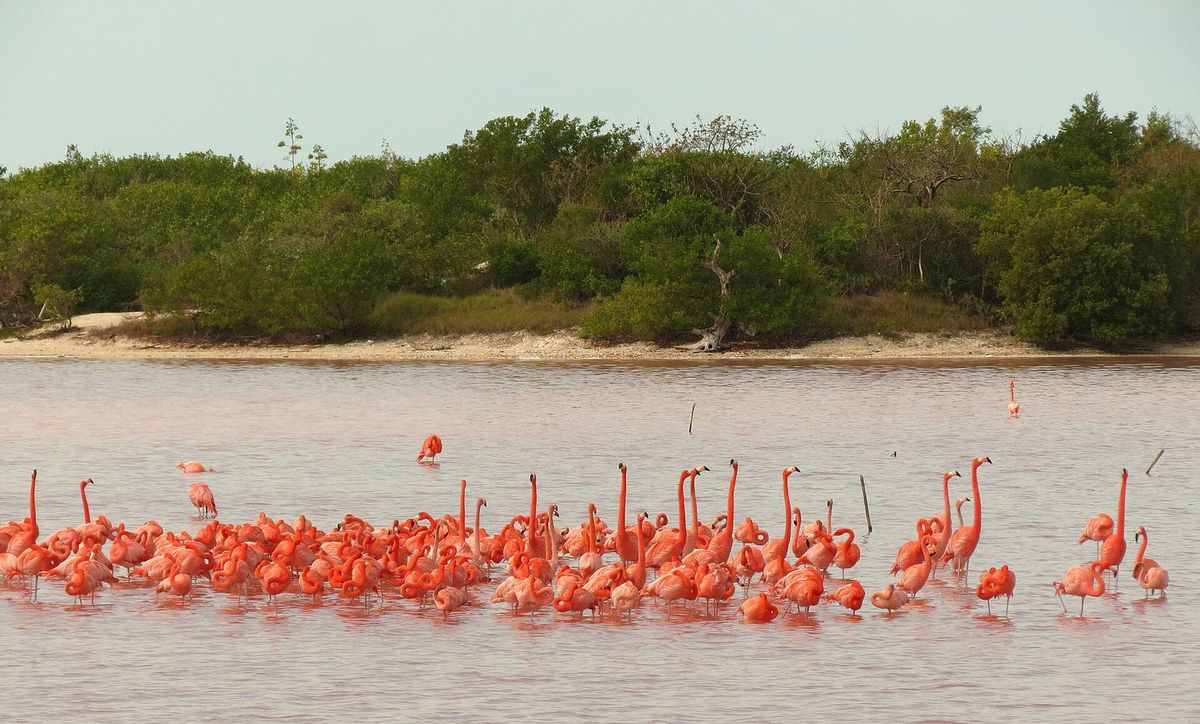
Celestún is a Gulf fishing port about 90 km (56 miles) from Mérida, roughly 90 minutes by car, longer during road work. You see the flamingos by boat; CONANP puts the peak at November to February. As of 31 October 2026, a boat for up to six lists at MX$3,026, and the reserve fee is MX$125 a person a day. Pink water is at Las Coloradas, across the state.
On this page
- What is there to do in Celestún?
- When are the flamingos there? Month by month
- The boat trip: what you pay
- How close can you get to the flamingos?
- Baldiosera spring and Bird Island
- The beach and the town
- Tour or DIY, day trip or overnight
- Getting there from Mérida
- A hacienda on the way back
- Red tide, nortes and safety
What is there to do in Celestún?
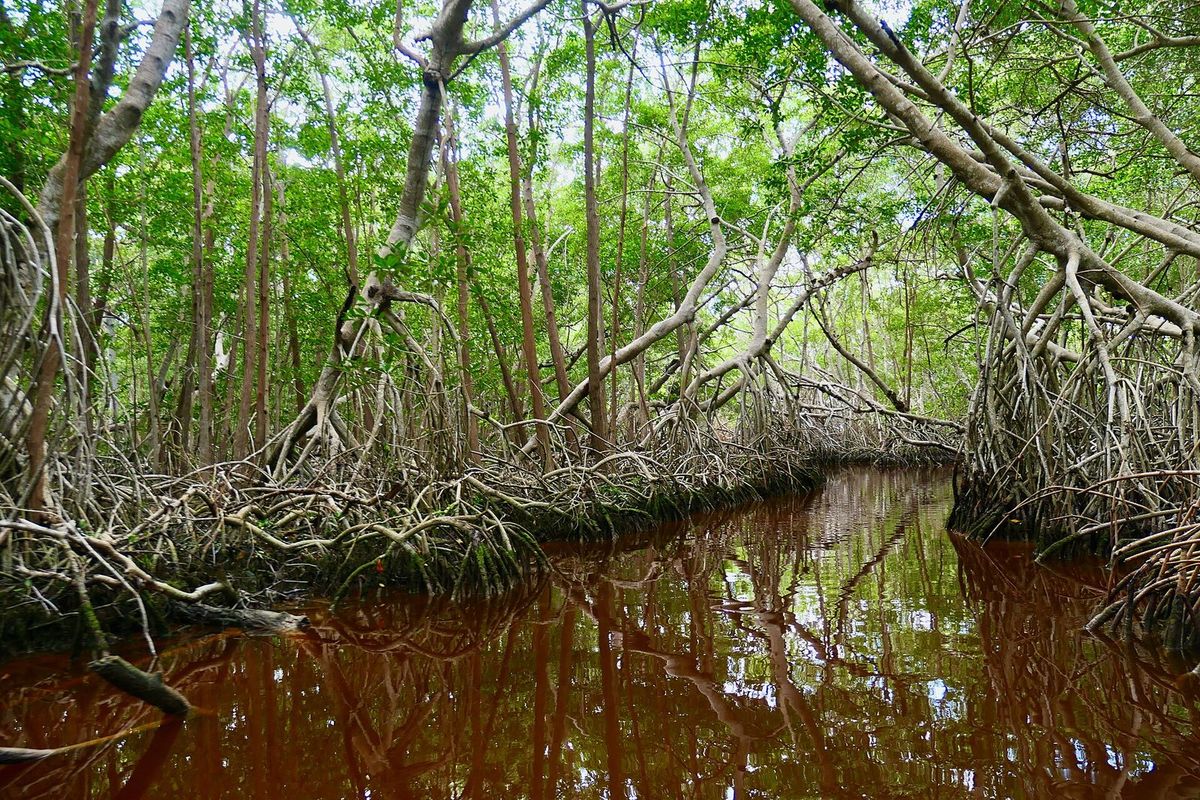
Mostly one thing: a boat trip into the ría, an estuary about 20 km (12 miles) long, to see American flamingos. The same trip runs through mangroves and past freshwater springs. The town adds a long Gulf beach.
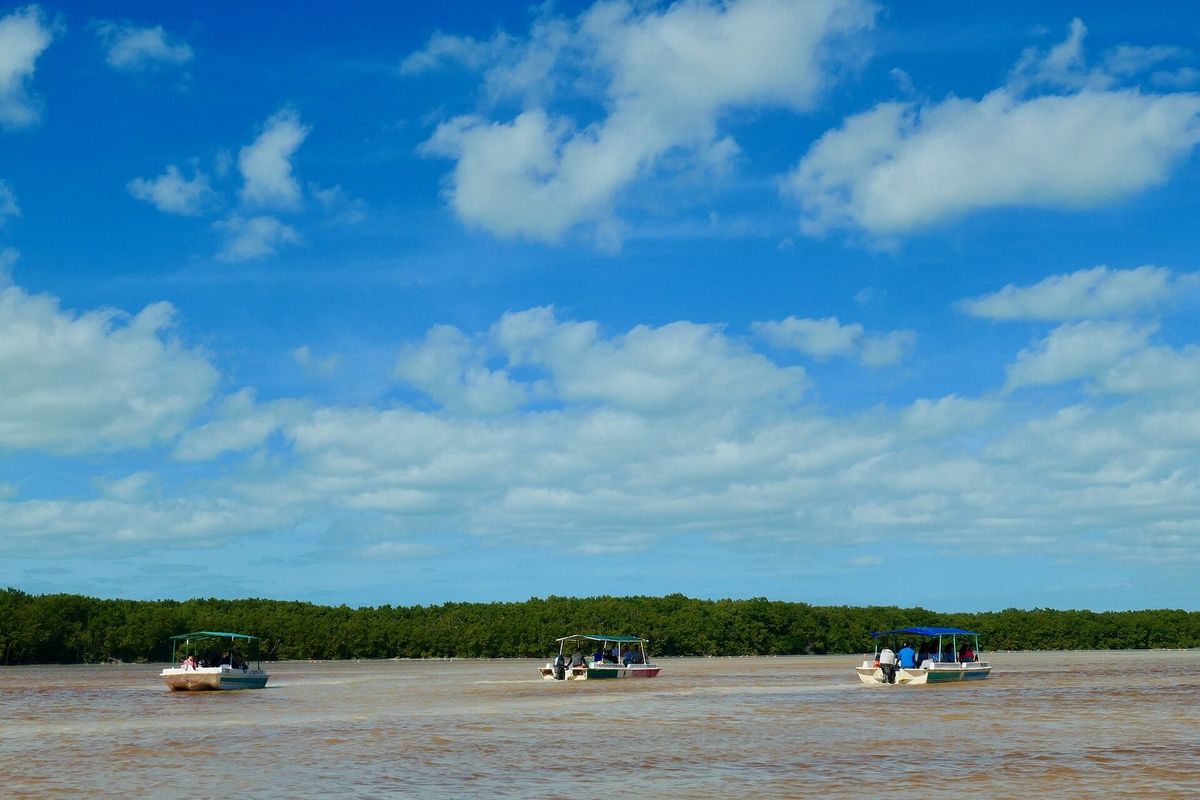
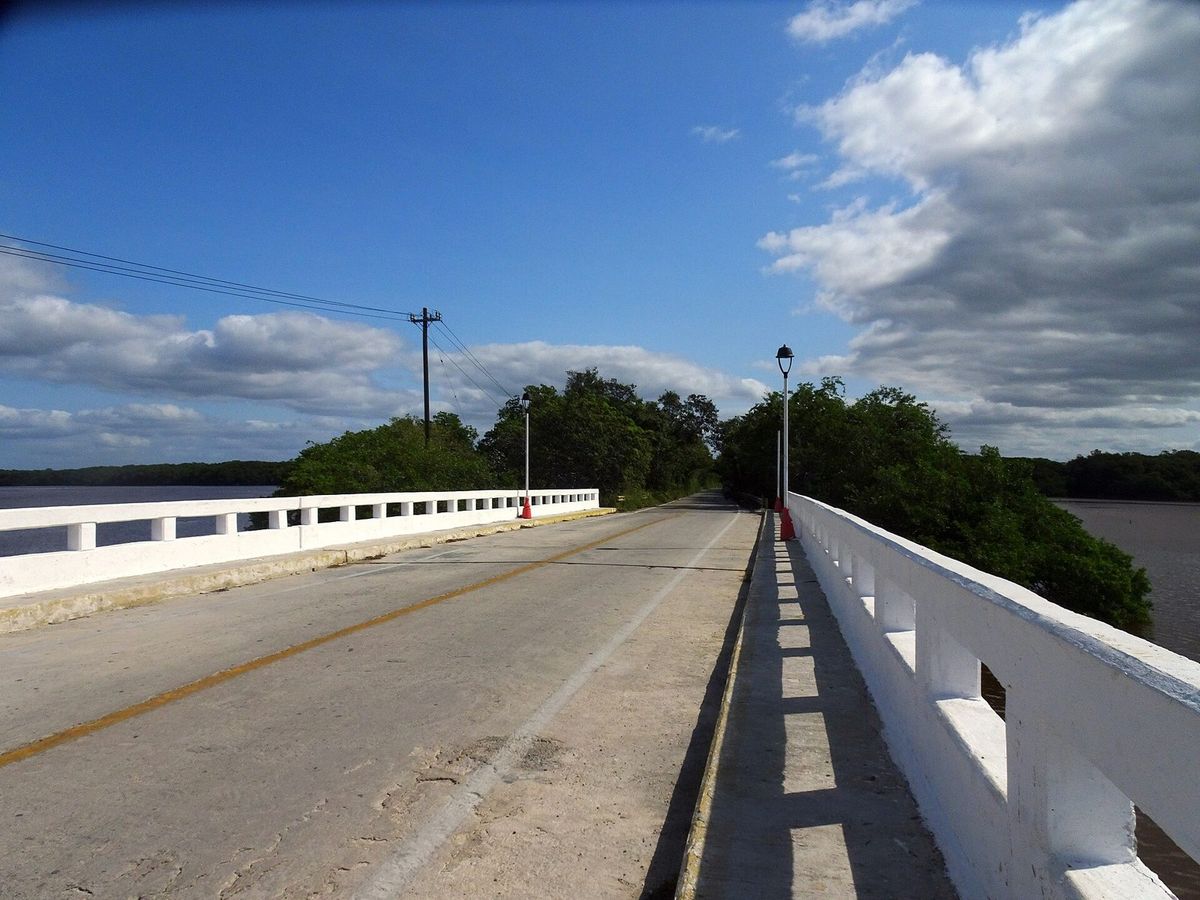
Celestún is a municipality and port town of 8,389 people (2020 census) inside the Ría Celestún Biosphere Reserve, 81,482 hectares (about 201,000 acres) across Yucatán and Campeche, decreed in November 2000. UNESCO counts 304 bird species there. The flamingos (Phoenicopterus ruber) feed and rest here; the main colony nests at Ría Lagartos. Boats leave from the Parador Turístico at the Hwy 281 bridge, 1.6 km (1 mile) before the plaza.
Go if you like birds and mangroves and don't mind an early start. Skip it if you want Caribbean water or need a bus home at a guaranteed hour.
Places it gets mixed up with
- Las Coloradas, the pink lagoons, are at the opposite end of the state: 331 km and about 5 hours 35 minutes from the Parador. Celestún has no pink lake.
- Río Lagartos is the other flamingo reserve, 206 km and about 3 hours 10 minutes from Mérida.
- Uaymitún is a viewpoint on the Progreso to Telchac coast road, covered in our Telchac Puerto guide.
- El Palmar is a separate state reserve to the north. The fee and rules on this page describe the federal reserve.
When are the flamingos there? Month by month
November to February is when CONANP, Mexico's protected-areas agency, reports the largest concentrations. The Parador's site adds that flamingos live in the reserve all year, in numbers that depend on season, tides and weather. We found no published monthly count for March to September and nothing recent for any month, so nobody can promise what you will see at Easter or in August.
Rain falls mostly from June to October, with 122.8 mm (4.8 inches) in September; November through May is dry. May is the hottest month, with average highs of 34.3°C (94°F).
| Month | High | Low | Rain | Flamingos |
|---|---|---|---|---|
| January | 28.9°C/84°F | 18.1°C/65°F | 25.8 mm | Peak window (CONANP). 2002 management program: up to about 23,000 from December to February. |
| February | 30.0°C/86°F | 18.4°C/65°F | 19.1 mm | Peak window (CONANP). |
| March | 32.3°C/90°F | 19.5°C/67°F | 9.8 mm | Parador's site: large groups through April. No count. |
| April | 33.9°C/93°F | 21.1°C/70°F | 11.5 mm | Nesting opens at Ría Lagartos. No count. |
| May | 34.3°C/94°F | 22.3°C/72°F | 38.0 mm | No count. |
| June | 33.8°C/93°F | 22.6°C/73°F | 116.5 mm | No count. |
| July | 33.6°C/92°F | 22.4°C/72°F | 110.9 mm | Nesting closes at Ría Lagartos. No count. |
| August | 33.5°C/92°F | 22.6°C/73°F | 102.2 mm | Birds present: boatmen to Amexi (August 2025), chicks banded (2026). No count. |
| September | 33.2°C/92°F | 22.6°C/73°F | 122.8 mm | No count. |
| October | 31.6°C/89°F | 22.0°C/72°F | 116.7 mm | No recent count. |
| November | 29.9°C/86°F | 20.1°C/68°F | 35.5 mm | Peak window opens (CONANP). |
| December | 28.7°C/84°F | 18.6°C/65°F | 25.5 mm | Peak window (CONANP). |
The 23,000 figure comes from a 2002 management program, and we found no update. We could not open the full text of the only monthly study we know of (Espino-Barros and Baldassarre, The Condor, 1989) and quote none of its numbers. The newest signal is from 2026: CONANP banded 147 chicks in the reserve, up from 70 in 2025, according to Ni Perra Idea (24 August 2026). That shows birds in August, with no flock size.
US searches for "celestun" peak at 4,400 a month in January and February, inside CONANP's window. Mexican searches peak at 49,500 in March and April, outside it (Google Ads, October 2025 to September 2026). If Easter or August is your only window, come for the mangroves and the town, and count any large flock as a bonus. Go in the morning, as the Parador's site advises. For the rest of the trip, see the best time to visit Mérida.
The boat trip: what you pay
As of 31 October 2026, the Parador Turístico's site lists MX$3,026 per boat, not per person, for up to six passengers, plus MX$505 for each extra passenger up to eight. The trip runs about 75 minutes by the count of Cultur, the state tourism body, and about 90 by the site. The site says you get an environmental interpreter, life jackets, traveler insurance and a route with flamingos, a mangrove tunnel, springs and Isla de los Pájaros. The Parador is open 8 am to 5 pm daily.
Treat that price with caution: we could not confirm who runs the site, Cultur neither links to it nor publishes a price, and the last official Celestún tariff we read dates from December 2019. Check the site before you leave and ask for the tariff at the ticket window.
| Item | Amount | Source |
|---|---|---|
| Boat, up to 6 people | MX$3,026 per boat | Parador's site, Oct 2026 |
| 7th and 8th passengers | MX$505 each | Parador's site, Oct 2026 |
| Shared seat | No price published | Parador's site, Oct 2026 |
| Optional certified Cultur guide | MX$700 | Parador's site, Oct 2026 |
| Children under 6 | Free with an adult; confirm at the ticket window | Parador's site, Oct 2026 |
| Federal reserve fee | MX$125 per person per day | LFD art. 198, Oct 2026. Official |
| Binoculars | MX$100 | Diario de Yucatán, Apr 2025 |
What we do not know is whether MX$3,026 includes IVA (sales tax) or the reserve fee, since the site mentions neither. In January 2022, according to Mérida Moderna, the boat and the fee were separate. If that still holds, six adults with no discount would pay MX$3,776 at October 2026 prices. Ask before you pay, and bring cash: the Parador's FAQ is unclear on cards.
The price has climbed: MX$1,700 in December 2019 (Diario Oficial de Yucatán), MX$2,088 with IVA in February 2022 (Mérida Moderna), MX$3,000 in April 2025 (Diario de Yucatán). For six people, the 2026 figure barely moves that number. For eight it does: they paid MX$3,000 in 2025 and would pay MX$4,036 in 2026, which looks like a change in what the base price covers (our inference).
Groups of seven or eight should confirm first. Cultur says boats take only six (undated page), and POSTA says six at low water (April 2025).
Boats also leave from the beach. Yucatán Today (1 August 2026) warns those are more often unaccredited and rougher. The same article points to a quieter option, Los Guardianes de los Manglares de Dzinitún, with kayaks and flat-bottomed chalanas; we could not confirm their prices.
The reserve fee in 2026
Reaching the town and beach carries no charge that we could find. The fee applies when you do an activity in the reserve, such as a boat tour or birdwatching.
As of 31 October 2026, the Ley Federal de Derechos, art. 198 fr. I Ter, sets MX$125.32 per person per day, payable as MX$125, since the law rounds to multiples of 5. The MX$225 you may see quoted belongs to a different clause (Sian Ka'an, Calakmul) and does not apply here.
- Exempt: under-12s, people with disabilities, seniors with an INAPAM card, pensioners and retirees. A senior on a tourist trip should not assume the exemption.
- 75% off: students and teachers with a current credential, and residents of high-marginalization municipalities.
- 50% off: Mexicans and foreign residents with proof.
Exemptions are due to change on 1 January 2027. According to TaxToday México (28 October 2026), the Senate sent the reform to the executive, but as of 31 October 2026 it had not appeared in the federal gazette. If you travel in January, check this line again.
How close can you get to the flamingos?
No closer than 50 meters (164 feet), under CONANP's visitor rules. Plan on binoculars or a long lens.
The 2002 management program says boatmen commonly made flamingos take off, with noise or by getting too close, to give visitors a better show. A 2015 paper links that behavior to stress and less feeding time. Do not ask your boatman to move in or flush the birds.
The same program bans harassing or feeding wildlife, loud noise, lights for watching animals and alcohol during ecotourism activities. Tourist boats stay out of the water of the north core zone, which it calls the flamingos' main feeding area. Yucatán Today and Diario de Yucatán advise mineral or eco-friendly sunscreen and repellent.
Baldiosera spring and Bird Island
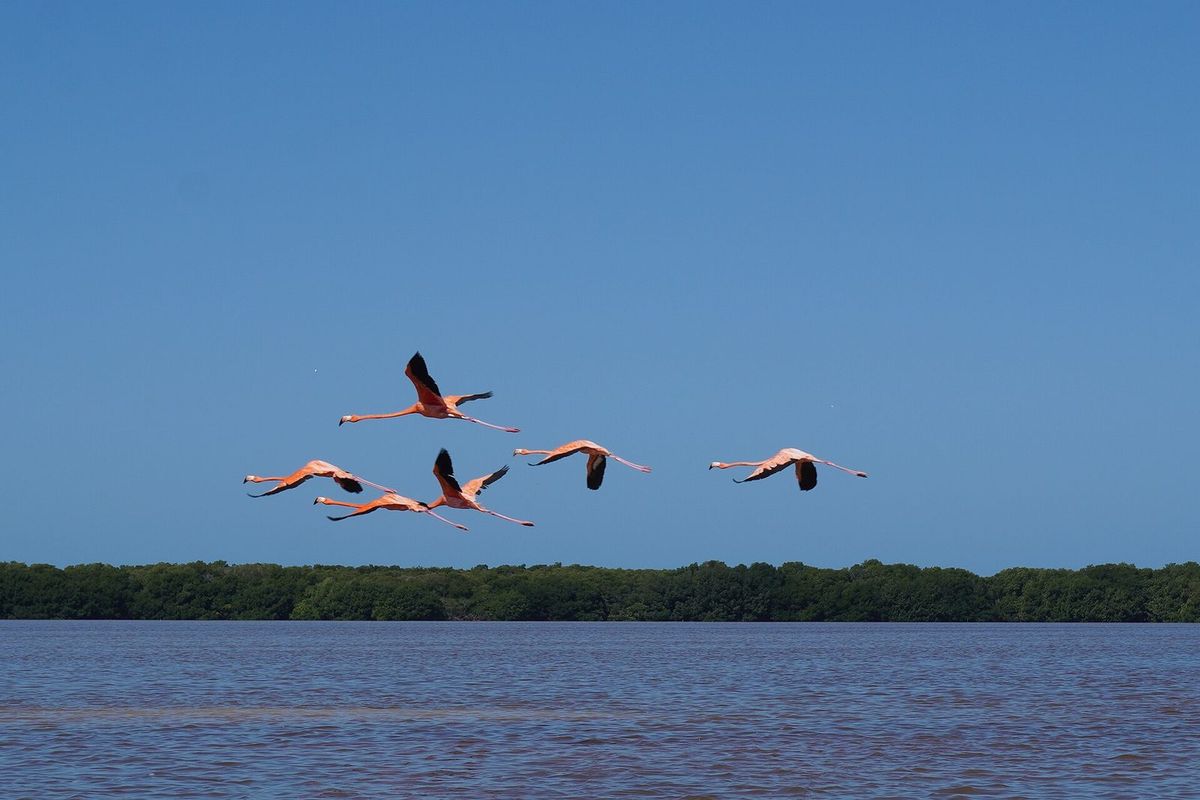
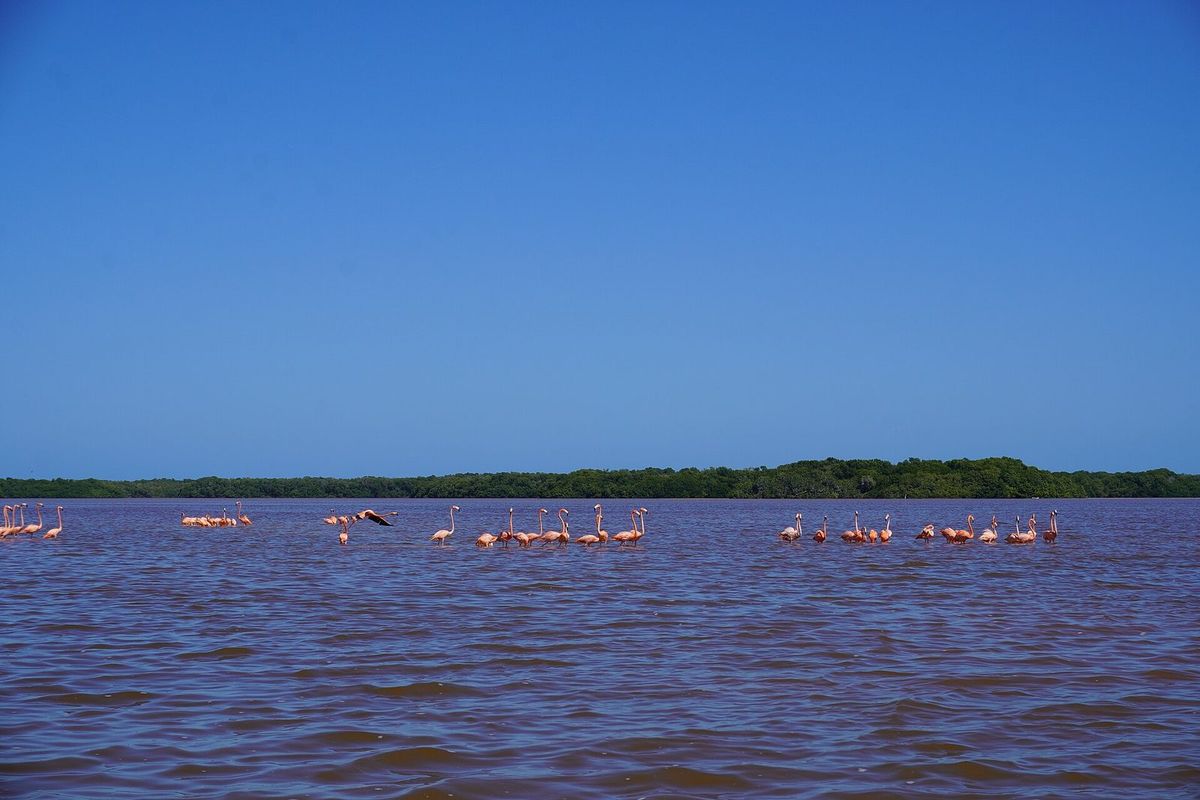
The Parador's site puts freshwater springs on the route, and Cultur names three: Baldiosera, Cambay and Tambor. Baldiosera, about 3.7 km in a straight line from the Parador, is one of the springs where the aquifer feeds the ría, its only fresh water besides rain.
Diario de Yucatán (26 April 2025) says you can swim when conditions allow. POSTA (18 April 2025) adds that a couple of crocodiles live there, and the Diario describes them as not aggressive but territorial. Do not feed them.
Isla de Pájaros (Bird Island) is in the management program and on the Parador's list of stops. No source says anyone lands there, so assume you see it from the boat. The petrified forest, which Sefotur names Tampetén, is on CONANP's list but not on the Parador's standard route. Ask before you pay.
The beach and the town
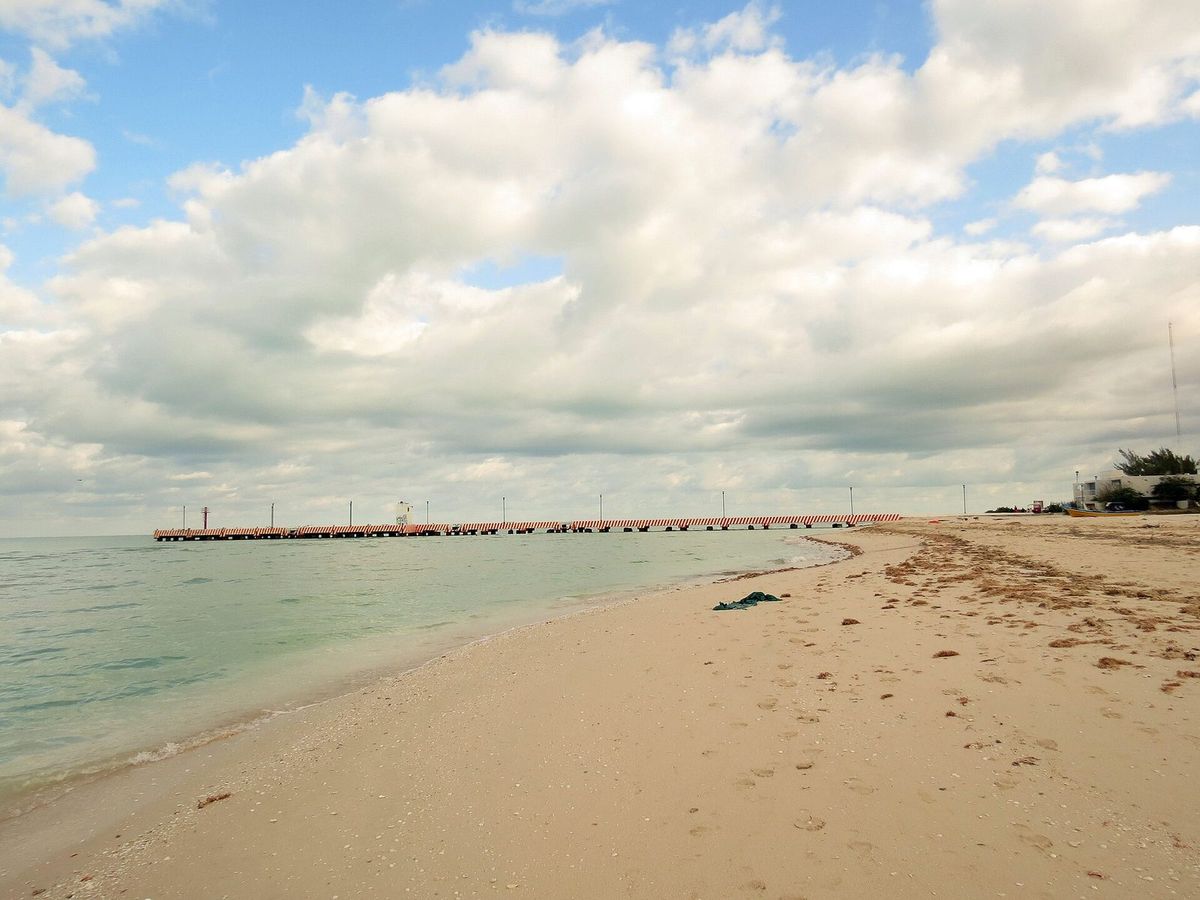
A long, wide beach runs along the town, with fishing boats, a pier and palapas. It faces west, and the sun sets over the sea. We found no charge to use it, and the 2002 management program bans vehicles on the beach from here north.
Swimming is fine unless a red flag is up (see red tide and nortes). We found no official water-quality reading for 2026. The August 2026 sargassum reports (El Universal, Infobae) concern Quintana Roo and do not name this coast.
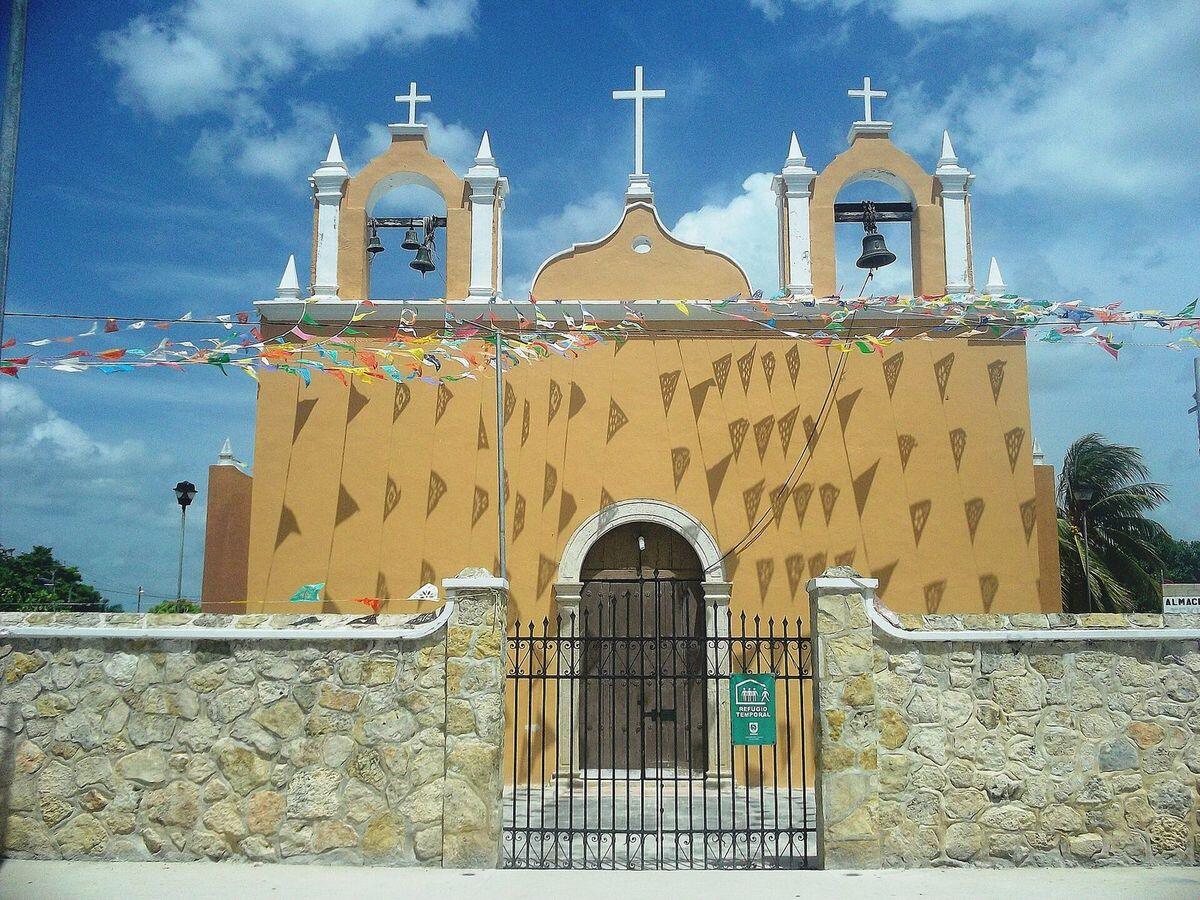
The town dates from 1718, per the management program. The name has no settled meaning: a state government caption in Infobae (1 September 2026) says "painted stone," Spanish Wikipedia gives "fright of stone" without a reference, and Yucatán Today (22 June 2026) records a tale about a fisherman, Celestino Tun. We found no linguist's reading.
Food and beds: we have not confirmed any restaurant or hotel open in 2026, so ask in town. For what to order, see our Yucatecan food guide. OpenStreetMap shows ATMs and a Pemex near the plaza, not confirmed working. Leave Mérida with cash and a full tank.
If you see land for sale, be careful. On 3 August 2026, according to Diario de Yucatán, the federal agency Profepa announced the temporary closure of the San Josué and Martha Elena developments inside the reserve, with 130.8 hectares cleared, including part of a mangrove. Read buying property in Mérida before you sign anything on this coast.
Tour or DIY, day trip or overnight
Self-drive works best for a group that fills a boat. A tour from Mérida suits solo travelers and couples, because the site's "Tour Compartido" shows no price or wait, and the last per-person figure we have is MX$500 from April 2025 (Diario de Yucatán). A hotel blog (21 March 2026) quotes tours at MX$600 to MX$1,200 per person, which is not an operator quote.
A day trip is enough. Allow 6 to 7 hours door to door by car: 3 hours of driving, 90 minutes on the boat, plus lunch or the beach, and extra during the road work. Stay over if you want the sunset, but confirm a room first. More ideas in our day trips from Mérida.
Getting there from Mérida
By car
About 90 km by CONANP's count and roughly 90 minutes on Hwy 281 through Hunucmá, Tetiz and Kinchil. Our routing from the Plaza Grande to the Parador gives 87 km and 1 hour 23 minutes in free-flowing traffic: allow longer during the road work.
This is the only road in. We found no toll on the route, though that is unconfirmed, and parking at the Parador came with the ticket in April 2025 (Diario de Yucatán).
According to the federal transport ministry, SICT (Diario de Yucatán, 13 August 2026), the Mérida to Tetiz stretch is getting new asphalt and five 2 km stretches past Kinchil are being widened to 12 meters, with some work running to December 2026. As of 31 October 2026 we could not confirm how far along it is.
In May 2026, after a fatal crash, residents blocked the port access for more than 30 hours; the blockade ended with a deal to widen five 2 km stretches (Diario de Yucatán, 29 May 2026).
By bus
Autobuses Oriente runs second-class buses: about 2½ hours, and about MX$75 on an undated page (yucatanbus.com, read October 2026). Confirm at the ticket window. Sources give two addresses in Centro, about 115 meters apart, and neither is confirmed:
- Terminal Oriente T50, Calle 50 #479 x 67 y 65, tied to the only timetable we found.
- Terminal Noreste, Calle 67 #529 x 50 y 52, which most guides name.
Ask which one sells your ticket. Yucatán Today lists (999) 924 6355 for Noreste (March 2023 table). yucatanbus.com shows T50 departures almost hourly from 5 am to 8 pm They are undated, so use them for planning only: the 6 am would reach Celestún around 8:24, in time for morning boats. The site also says there are no online sales and that second-class windows often take cash only.
Get off at the bridge: the bus passes the Parador before town and stops on request, according to Wikivoyage (June 2023). We publish no last-bus time because no current source gives one, so ask when you arrive, before you board a boat.
Other options
Combis (shared vans) run, but sources disagree on where they board, so we give no boarding point. We found no Va y Ven route and no Tren Maya stop at Celestún. See Mérida without a car.
From Sisal there is no coast road or direct bus: about 85 km and roughly 90 minutes by car via Hunucmá, and buses change at Hunucmá (Rome2Rio). See our Sisal guide, or Progreso and the beach towns near Mérida for a closer coast day.
A hacienda on the way back
No hacienda with verified visiting hours sits on Hwy 281. This is a detour, by car only. Hacienda Yaxcopoil is at km 220 of Hwy 261, the Mérida to Uxmal road, about 84.5 km and 1 hour 25 minutes from Celestún and 34 km from Mérida.
According to its site in October 2026, entry is MX$200 per person, and under-15s are free with their parents. It opens Monday to Friday 9 am to 6 pm (last tour 5 pm) and Saturday 9 am to 2 pm (last tour 1 pm), and closes Sundays and holidays.
A weekday plan: boat at 8:30 am, lunch, leave at 1:30 pm, Yaxcopoil around 3 pm, Mérida around 5 pm Those times assume free-flowing traffic; add a margin for the road work.
Red tide, nortes and safety
Red tide, as of 31 October 2026. A press search on that date found no declared 2026 event, only a fishermen's video of possible patches off Dzilam de Bravo, on the east coast, with no official confirmation (POSTA, 26 April 2026). No notice does not mean all clear, and we found no standing page with the current flag. Before you swim, look for notices from Yucatán's harmful algal bloom committee (Comité de Seguimiento y Evaluación de Florecimiento Algal Nocivo) and Salud Yucatán. If a red flag is up, stay out.
The warning comes from 2025. The state committee declared a red tide from Progreso to Celestún on 12 August 2025 (Por Esto) and closed the event on 11 September, with 117 km of coast affected (Diario de Yucatán).
Accounts conflicted at Celestún: the research center Cinvestav rated recreational risk at this beach "poco probable," or unlikely (Diario de Yucatán, 23 August), yet on 27 August a red flag still reached toward Celestún, with advice to stay out of the sea (Diario de Yucatán). When accounts conflict, follow the committee's flag.
Nortes. These northwest winds hit hardest from November to February, up to 80 km/h (50 mph) at sea (2002 management program). Those are the flamingo months, and yucatan.guide (August 2026) warns they can cancel boats, so keep a spare morning.
Hurricanes. They mostly come from August to October; see our hurricane guide.
Safety. We could not get municipal crime counts. Por Esto (13 October 2026), citing SESNSP, reported 21 intentional-homicide victims in Yucatán from January to September 2026, the lowest of any state. Context in is Mérida safe.
A day from Mérida by car
- 6:30 am Leave Mérida with cash and a full tank. Allow more than 90 minutes on Hwy 281 while the road work lasts.
- 8:15 am Reach the Parador at the bridge. Ask for the current tariff and whether the reserve fee is included.
- 8:30 am Board the boat for 75 to 90 minutes on the ría. Bring a hat, water and binoculars.
- 10:30 am Drive on 1.6 km to town for the plaza and the beach. Swim if no red flag is up.
- 12:30 pm Lunch in town. We have no restaurant confirmed for 2026, so ask at the Parador or the plaza.
- 1:30 pm Head back. On a weekday you can detour to Hacienda Yaxcopoil; otherwise you reach Mérida by mid-afternoon, in daylight.
Frequently asked questions
Is Celestún worth visiting?
For flamingos on a day trip, yes from November to February, when CONANP reports the largest numbers. At other times no counts are published, so come for the mangroves and the beach and treat large flocks as a bonus.
Can you swim in Celestún?
Yes, in the Gulf off the town beach, unless a red flag is up. In August 2025 a red tide took that flag toward Celestún and the state committee advised staying out of the sea. You can also swim at Baldiosera spring when conditions allow; crocodiles live around it.
How do you see the flamingos at Celestún?
By boat from the Parador Turístico at the bridge, for 75 to 90 minutes, or from the beach with an accredited operator.
How much is the boat at Celestún?
MX$3,026 for up to six, MX$505 for each extra passenger up to eight, according to the Parador's site on 31 October 2026. The site gives no shared-seat price.
Is there an entry fee?
Not to reach the town or beach, as far as we could find. The federal reserve fee, MX$125 per person per day as of 31 October 2026, applies to activities such as boat tours. Under-12s and seniors with an INAPAM card are among the exempt; Mexicans and foreign residents pay 50%. Ask if the boat price includes the fee. Exemptions are due to change in January 2027.
Are flamingos still there in summer?
Some: boatmen told Amexi they were present in August 2025, and CONANP banded chicks in the reserve in August 2026. We found no published counts for those months, so nobody can promise a number.
Can I go by bus?
Yes. Autobuses Oriente, second class, about 2½ hours from Centro. Sources give two addresses, Terminal Oriente T50, Calle 50 #479 x 67 y 65, and Terminal Noreste, Calle 67 #529 x 50 y 52, so ask which sells your ticket. We do not publish a last-return time: confirm it when you arrive.
Day trip or overnight?
A day trip works: leave early and be back by evening. Stay over if you want the sunset, but confirm your room first.
How we reported this
This guide was compiled from public sources without a site visit: CONANP, Mexico's Ley Federal de Derechos, SMN, Cultur, the Parador's site, Yucatán press and OpenStreetMap, with our own routing. Facts were checked on 31 October 2026. Still not confirmed on the ground: who runs the Parador's site, whether IVA and the reserve fee sit inside the boat price, the price of a shared seat, which terminal sells bus tickets, the last bus back, how far along the Hwy 281 road work is, the red-tide flag status, and which restaurants and hotels are open. We could not read the full Espino-Barros and Baldassarre paper (1989). Photos are from Wikimedia Commons, with their dates. We will update this page after a site visit. Spotted something out of date? Tell us.
- CONANP: Ría Celestún reserve, attractions, hours, fee and visitor rules
- CONANP/SEMARNAT: Ría Celestún Biosphere Reserve management program (2002)
- Ley Federal de Derechos, art. 198, text in force, read Oct 31, 2026
- Gaceta Parlamentaria 7145-IV: Hacienda committee report on the 2027 fee reform (Oct 13, 2026)
- SMN-Conagua: climate normals 1991-2020, station 31040 Celestún
- Parador Turístico Celestún site: boat prices and services (not confirmed as official; read Oct 31, 2026)
- Cultur Yucatán: Celestún page (undated)
- Diario de Yucatán: boat trips in the Celestún reserve (Apr 26, 2025)
- POSTA: what the Ría Celestún boat tour costs (Apr 18, 2025)
- Diario de Yucatán: SICT works on the Celestún road (Aug 13, 2026)
- Diario de Yucatán: residents' deal to widen the Celestún road (May 29, 2026)
- Diario de Yucatán: Cinvestav on red tide, Chuburná to Sisal (Aug 23, 2025)
- Diario de Yucatán: committee release on beach flags (Aug 27, 2025)
- Diario de Yucatán: red tide ends after 117 km of coast (Sep 11, 2025)
- POSTA: fishermen's video of possible patches off Dzilam de Bravo, unconfirmed (Apr 26, 2026)
- Decreto 197/2026: Yucatán harmful algal bloom committee (Diario Oficial de Yucatán, Jun 17, 2026)
- Diario de Yucatán: Profepa closes developments in Celestún (Aug 3, 2026)
Get the monthly Mérida brief
Once a month: what changed in the city, with sources. No spam, and you can leave any time.
- What changed in the city
- Figures with their source
- One email a month
Keep exploring
Day Trips from Mérida: Ruins, Cenotes & the Coast
Uxmal and Chichén Itzá, the yellow town of Izamal, swimming holes at Homún, and the Celestún flamingos, all within about 90 minutes by car, bus, or train.
Read guide →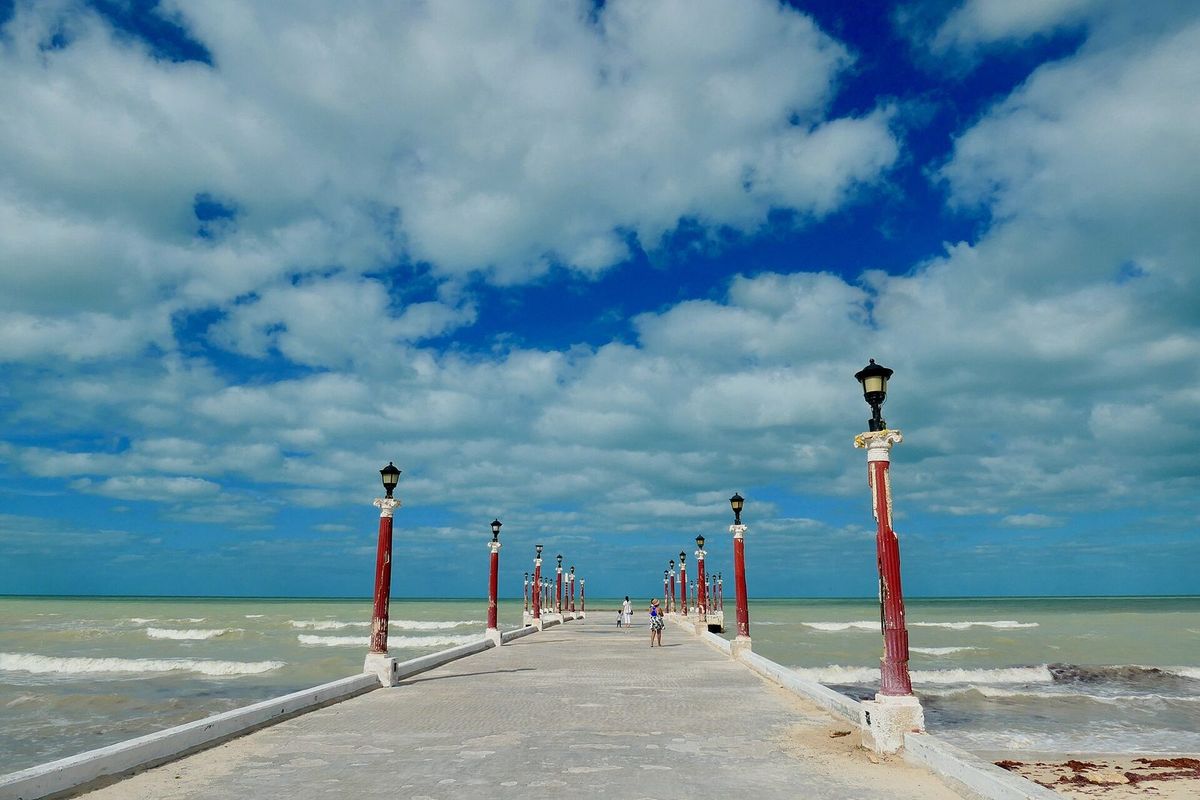
Sisal, Yucatán: A Quiet Gulf Port One Hour from Mérida
The port that gave sisal fiber its name is a fishing town of about 2,000 people, with its Pueblo Mágico title under review and half its homes in temporary use in 2020.
Read guide →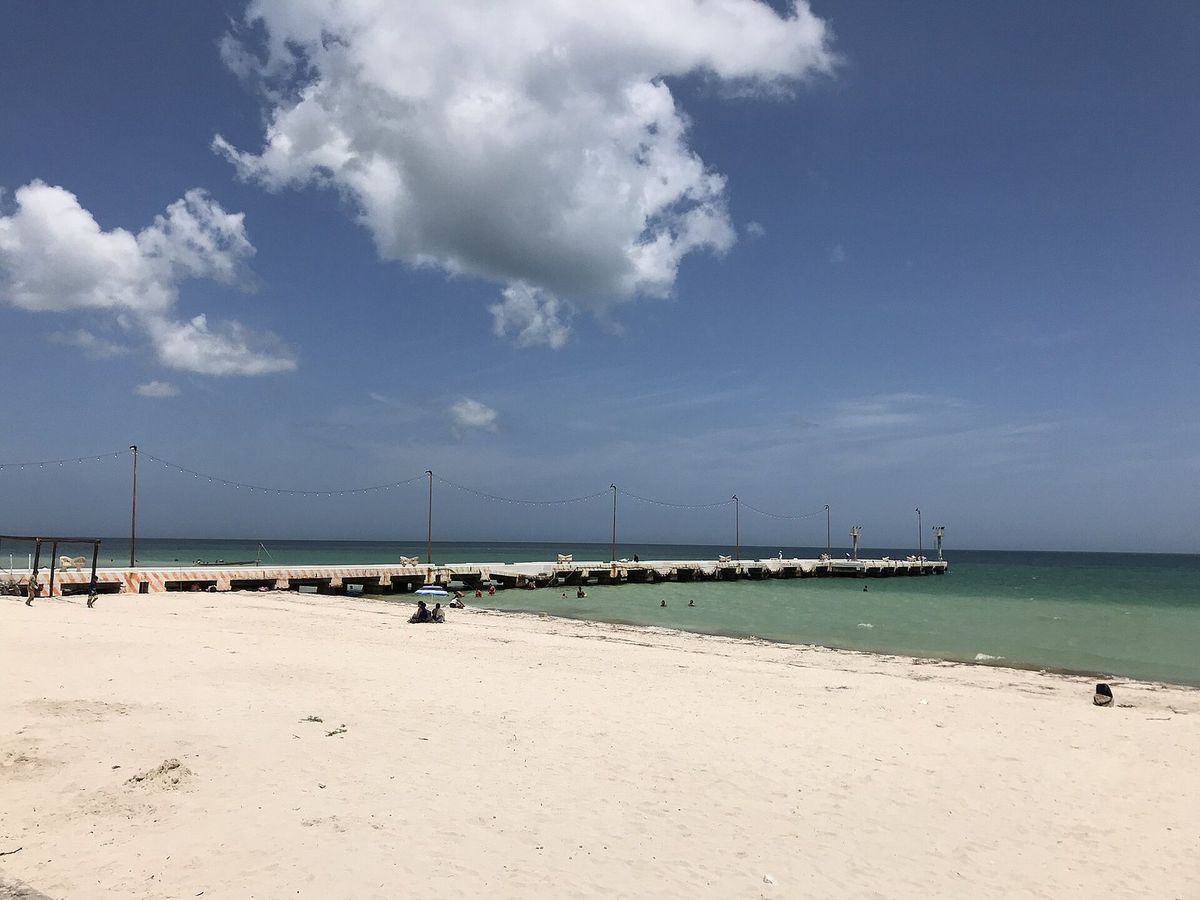
Telchac Puerto: A Day on Yucatán's Quiet Coast
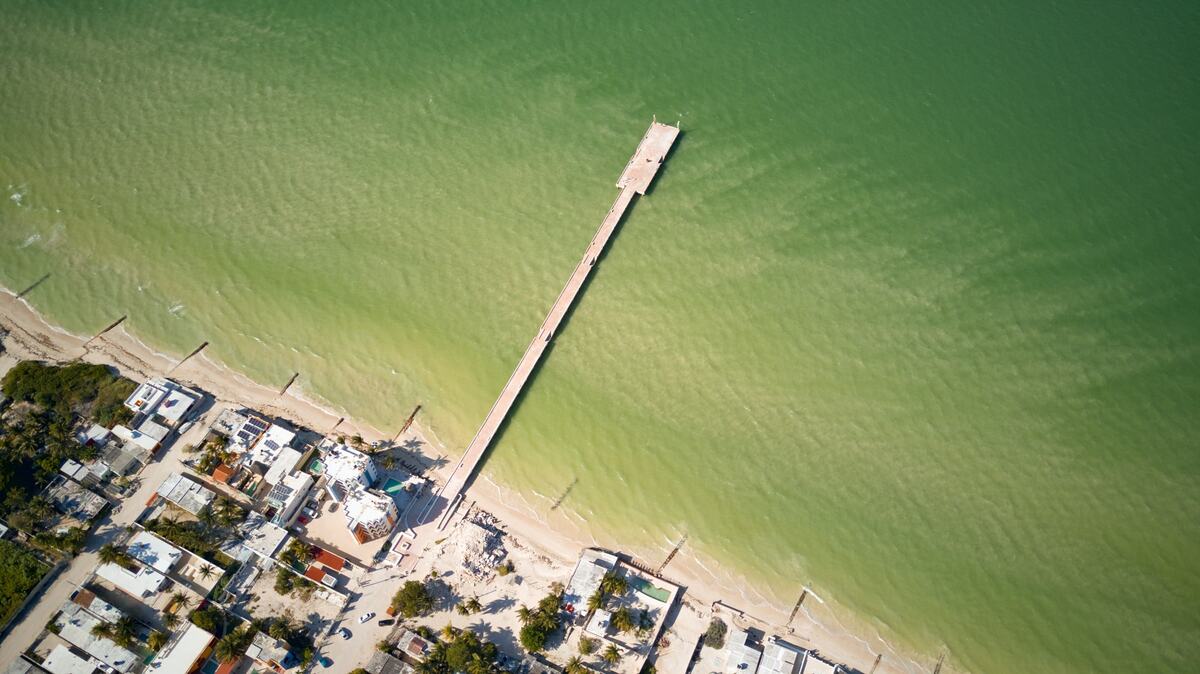
A fishing town with a long pier and shallow Gulf water. Plan the day around getting back: Rome2Rio shows the last bus at 15:30. Every price in this guide carries its date.
Read guide →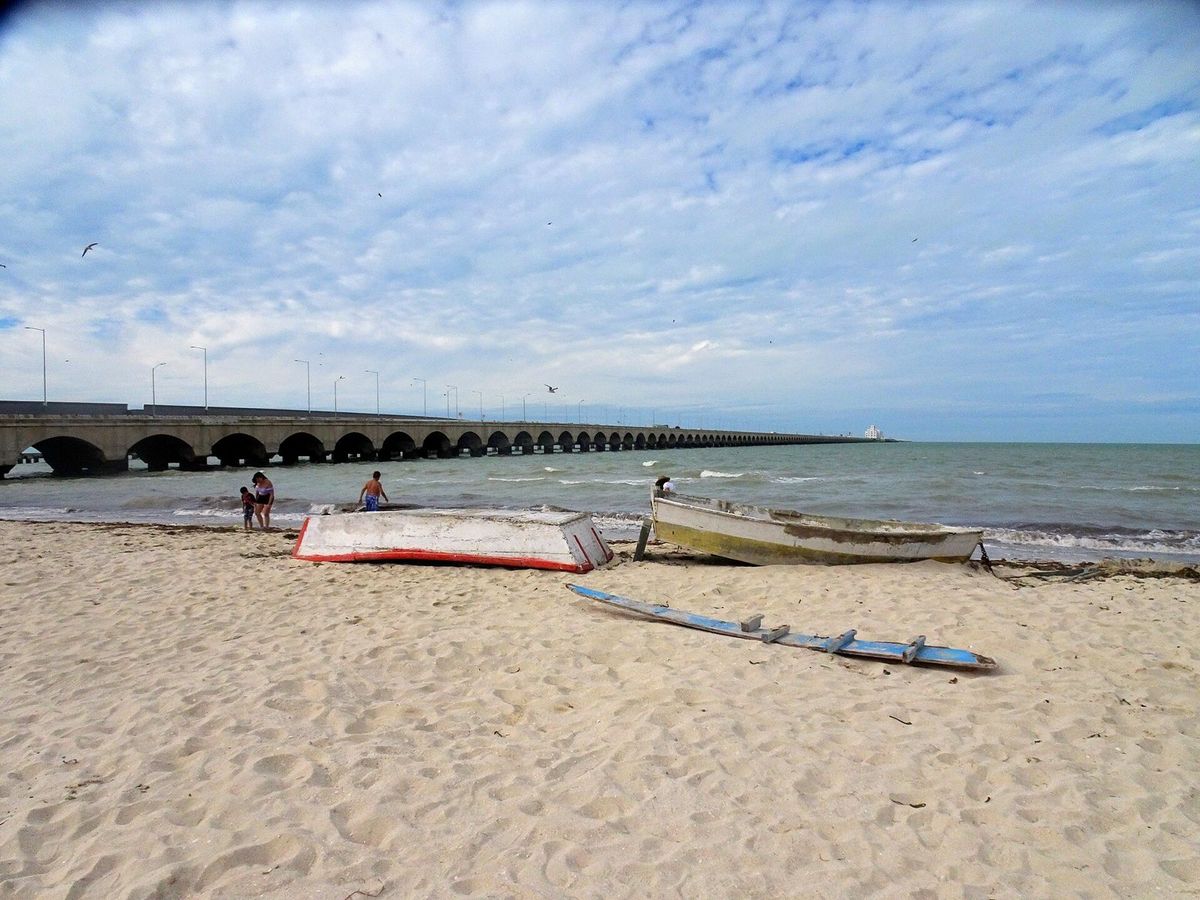
Beach Towns Near Mérida: The Gulf Coast Guide
From Progreso, forty minutes north of the city, to Chicxulub Puerto, Chelem, Chuburná, Telchac Puerto, and Sisal, compared on town character, house prices, and buying with a fideicomiso.
Read guide →
Best Time to Visit Mérida: Weather Month by Month and the May Heat
Average highs, lows and rainfall for all 12 months from Mexico's national weather service (SMN), October to February month by month, 2026–2027 event dates, the June–October storm pattern, hurricane risk and a packing list.
Read guide →
Living in Mérida Without a Car: What Works
Centro's walkable grid, Va y Ven buses, the Ie-Tram, Uber and DiDi fares, and the April-to-June heat that moves errands to mornings and evenings are all covered here.
Read guide →