Cholul, Mérida: the Old Village Inside the Privada Belt
A colonial village with murals in its church, ringed since the late 1990s by gated subdivisions on former ejido and hacienda land.
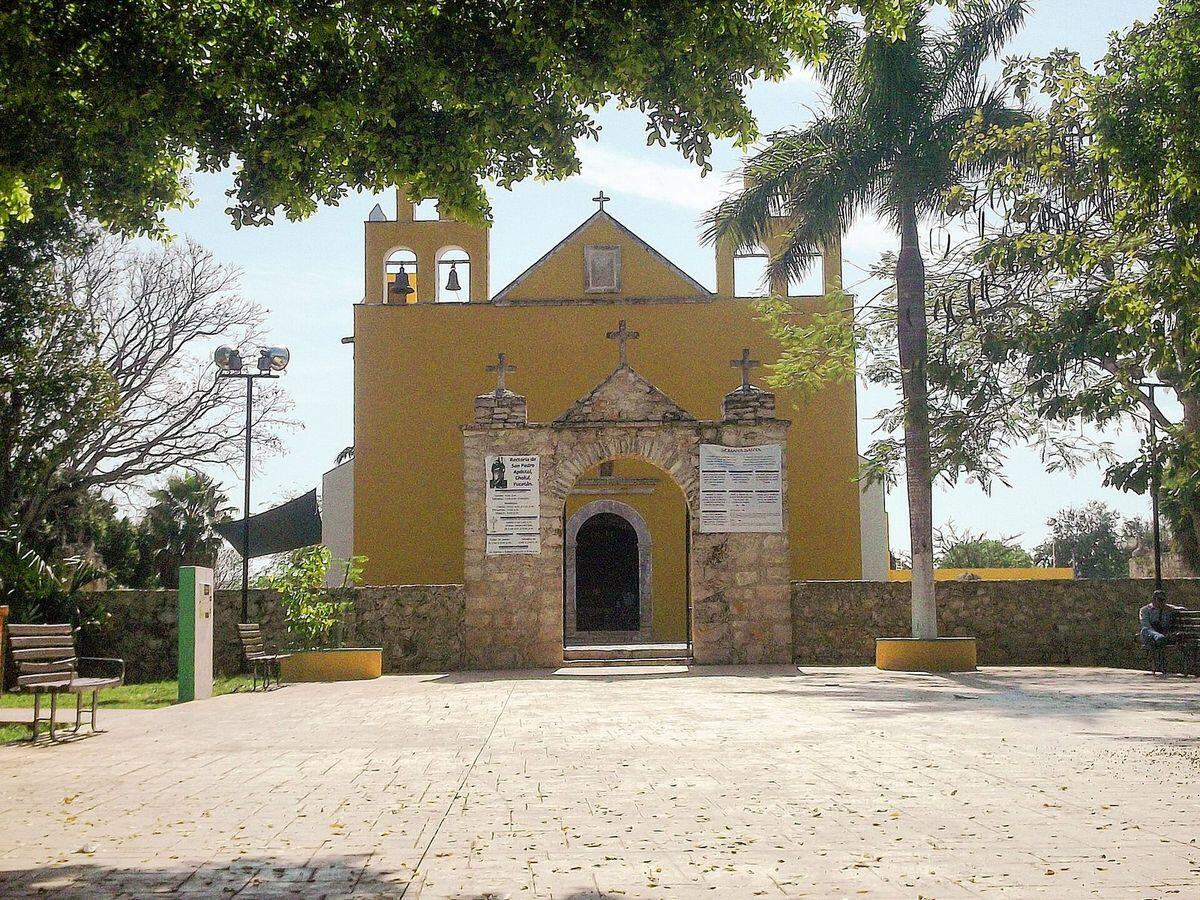
Cholul is part of Mérida: a comisaría, a district under the city government, not a separate municipality. It sits just outside the Periférico ring road on the northeast side, about 12 km by road from the Plaza Grande, and counted 11,745 people in the 2020 census. The name covers two places: an old village whose church holds colonial murals, and a belt of gated privadas built since the late 1990s. Hacienda San José Cholul, the luxury hotel, is elsewhere, in Tixkokob. Check water and power before you rent or buy here.
On this page
- Two Cholules: the pueblo and the privadas
- How a henequen town became a suburb
- What does Cholul mean?
- The church murals and the village center
- The ruined haciendas and the "haunted" one
- Getting to Cholul by bus or car
- Living in Cholul: pros and cons
- Water, power and traffic
- Schools the state lists in Cholul
- Safety: what the numbers can tell you
- Climate
Two Cholules: the pueblo and the privadas
People use the name Cholul for two places. One is the old pueblo: the church, the park with its noria (an old well), the market and Colonia Guadalupe. The other is the ring of privadas, gated subdivisions on former ejido (communal farm) and hacienda land. POSTA counted "more than 20" subdivisions, privadas and housing units in June 2025.
That split muddies the numbers. The 11,745 people in the 2020 census are the INEGI locality only, and do not tell you how many live in the privadas: Villas Cholul, for one, is counted separately, with 332 people.
| Name | What it is |
|---|---|
| Hacienda San José Cholul | A luxury hotel in Tixkokob, about 35 km east of Mérida in a straight line |
| Gran San Pedro Cholul | A residential development and brand. Its site gives "Km 1 Carretera a Conkal." |
| San Pedro Cholul | The pueblo's colonial name, a ruined ex-hacienda and a residential zone, all at once |
| Cholula | A different city, in Puebla |
For the wider area, see north Mérida neighborhoods and towns around Mérida.
How a henequen town became a suburb
For more than two centuries Cholul barely grew: 126 people in the early 1700s and 154 in 1900, according to Laura Machuca (Península, 2011). No main road reached it and haciendas hemmed it in. Residents asked for their own town council and were refused on 19 February 1842.
Six haciendas surrounded the town until the 1937 land reform, and before the 1950s people reached Mérida on foot or horseback (Jimena Rodríguez Pavón, Península, 2011). A station east of town had the Progreso-Motul-Tizimín train three times a day.
Henequen collapsed in the 1970s and people started commuting to Mérida. In 1989 residents blocked roads at rush hour and won their own urban bus route. Parceling of the ejido started in 1999 under PROCEDE, with 109 beneficiaries getting about 5 ha each, and many plots sold before titles arrived, some cheaply.
What does Cholul mean?
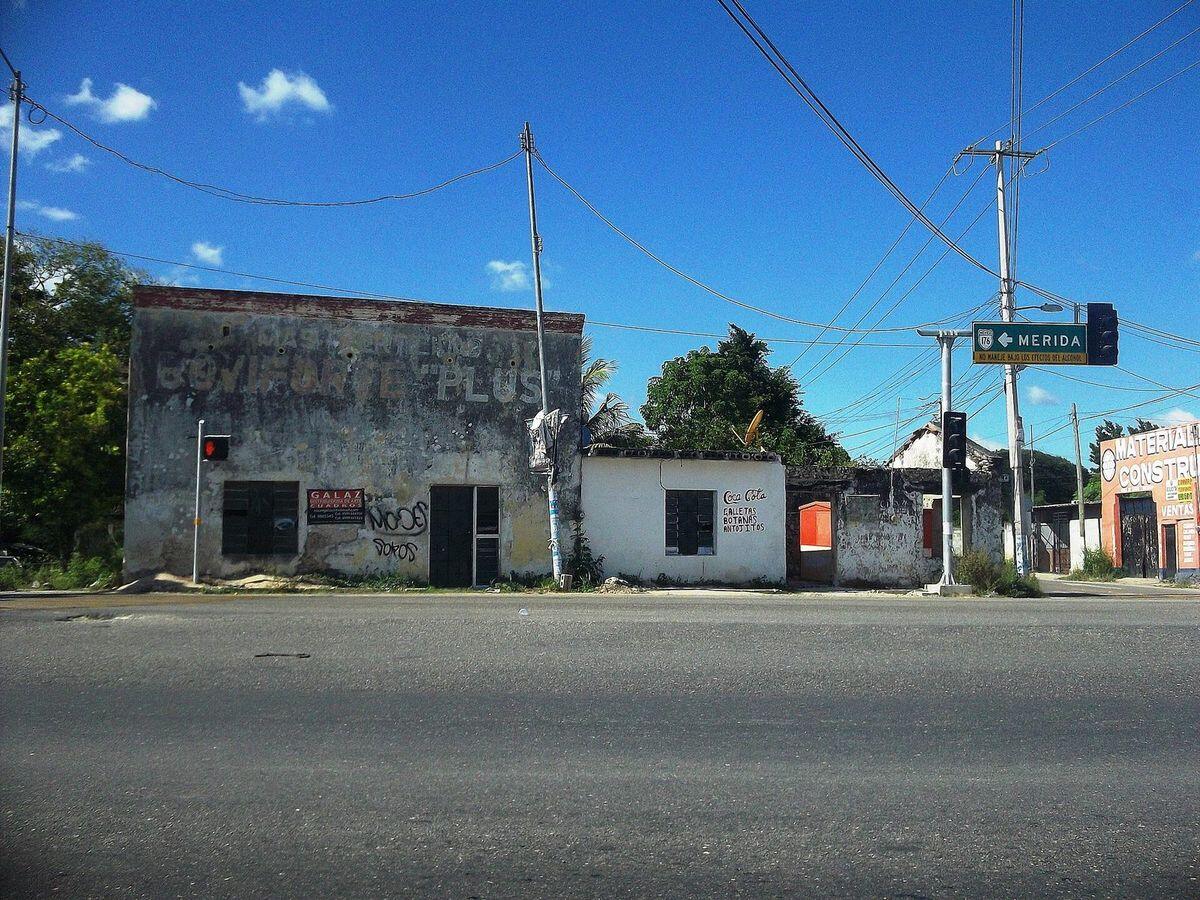
Colonial Maya texts write the name as Chulul, and dictionaries of the period give that word three senses: a very strong tree used to make bows (Apoplanesia paniculata), the hard heartwood of any tree, and the bow itself. The entries are in David Bolles's concordance (FAMSI), which compiles the Motul, San Francisco and Vienna dictionaries.
The popular translations are not in those entries: "wood in the water" (Spanish Wikipedia, uncited), "water wood" (Yucatán Magazine, 2021) and "soaked woods" (Yucatán Magazine, 2023). No source says why the town took the name.
The church murals and the village center
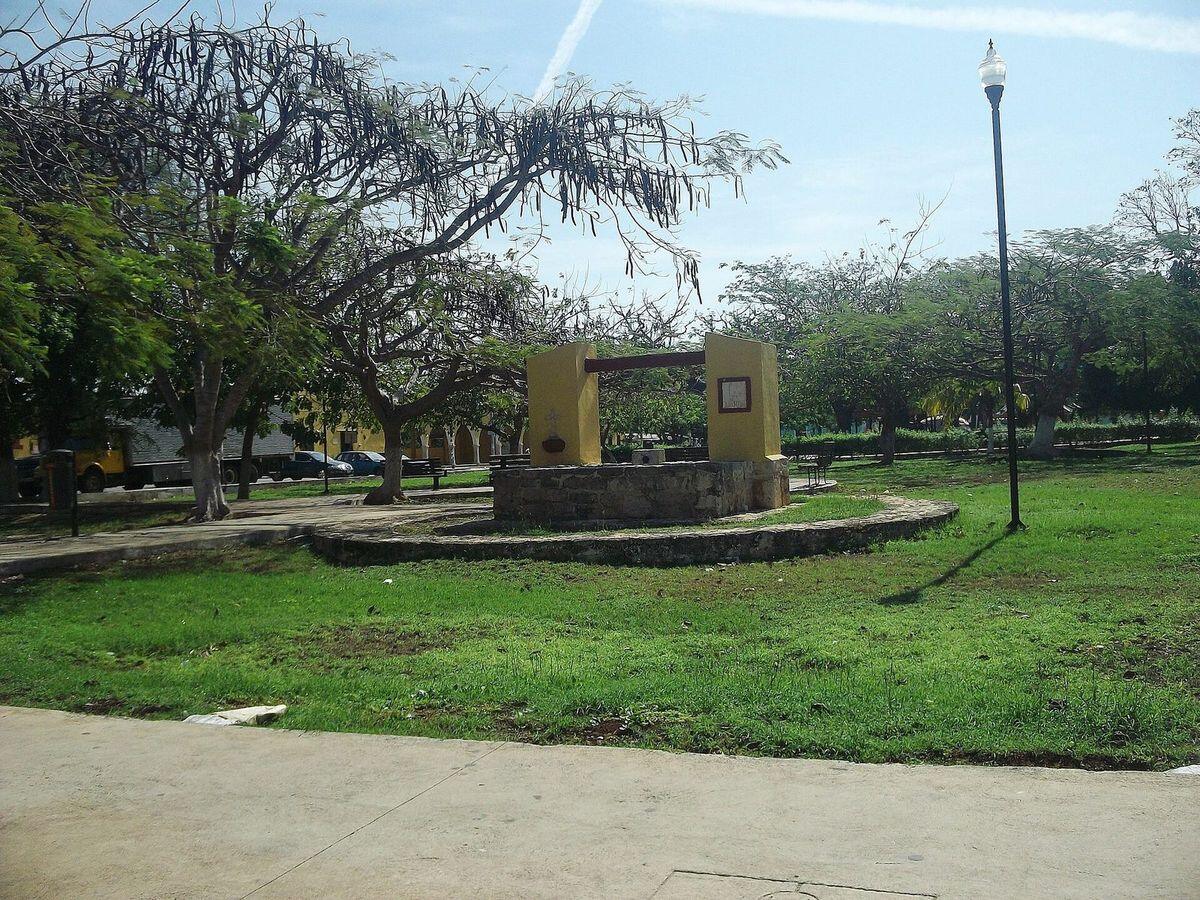
The thing to see is inside the church of San Pedro Apóstol, and we cannot promise it will be open. Diario de Yucatán says the murals can be seen during normal opening times, but we found neither those hours nor a mass schedule. Ask at the comisaría building, or read the boards on the atrium's stone arch, which show in the 2012 photo.
Above the triumphal arch, Christ and God the Father crown the Virgin, surrounded by the Holy Spirit, the twelve apostles, saints and angels playing music. More frescoes cover the vaults and walls, above all in the presbytery (Diario de Yucatán, "100 Treasures" series, undated).
Richard Perry (Mexico's Murals, December 2018) dates the paintings to about the late 1600s or early 1700s. He says they were uncovered from the 1990s under 19th-century whitewash, and that INAH Yucatán finished restoring them in 2005 and 2006. We found no INAH confirmation, and no source says who painted them.
The building started as a 16th-century open chapel, now the presbytery. The stone church followed in the 17th century.
The park is a public plaza with old ceibas. Photos from 2011 and 2012 show the noria and a cenote behind a railing. It is no swimming spot, and we found no access information. The market is attached to the comisaría building, and Yucatán Magazine advised arriving early in 2023.
With the church open, the trip is worth it; closed, the center is a short stop. That is our judgment from the sources. We could not verify a single hotel or restaurant as open. Pair it with Conkal, 7.4 km away, or Dzibilchaltún, 13.3 km (OSRM estimates, no traffic).
Fiestas
We found no 2026 or 2027 dates. Rodríguez Pavón (2011) records fiestas in April and August for the Virgen de la Asunción, though that feast normally falls on 15 August, as she notes, and gremios (guild processions) for the Virgen de Guadalupe on 1-12 December. At Hanal Pixán, children go door to door with lanterns.
The ruined haciendas and the "haunted" one
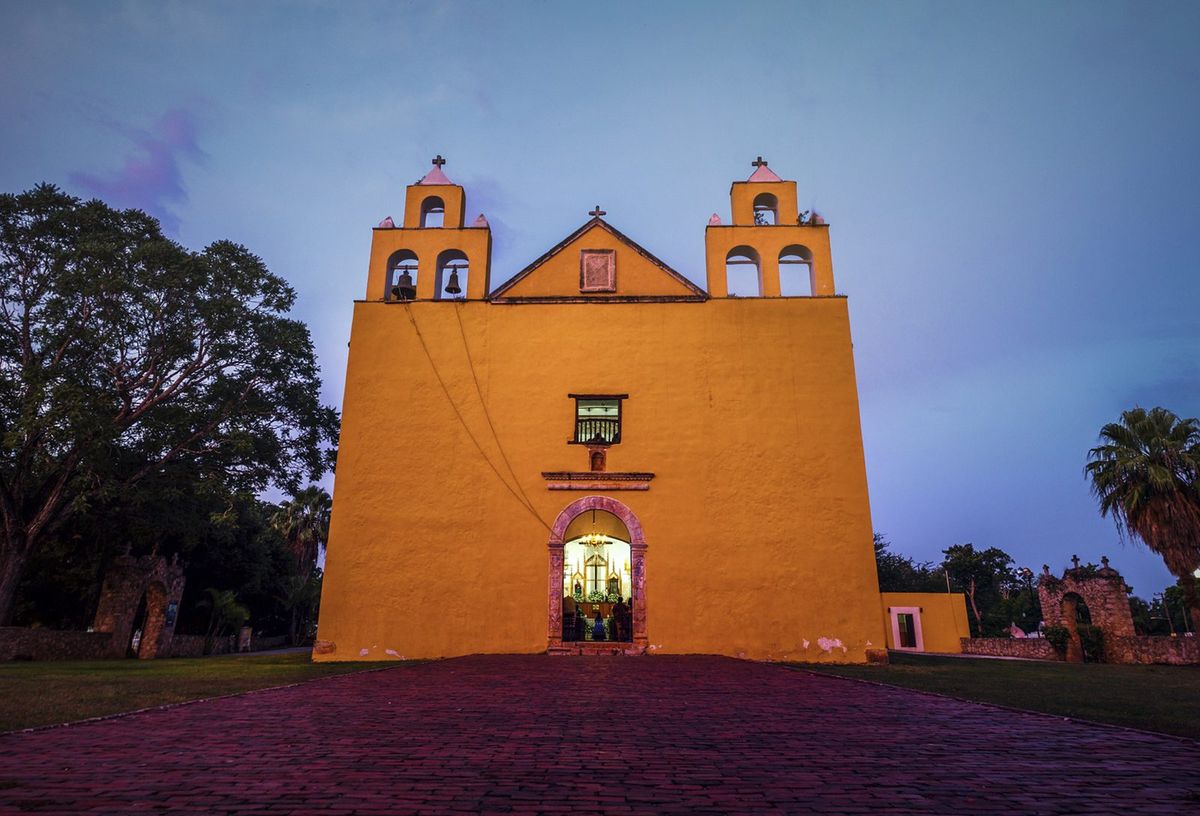
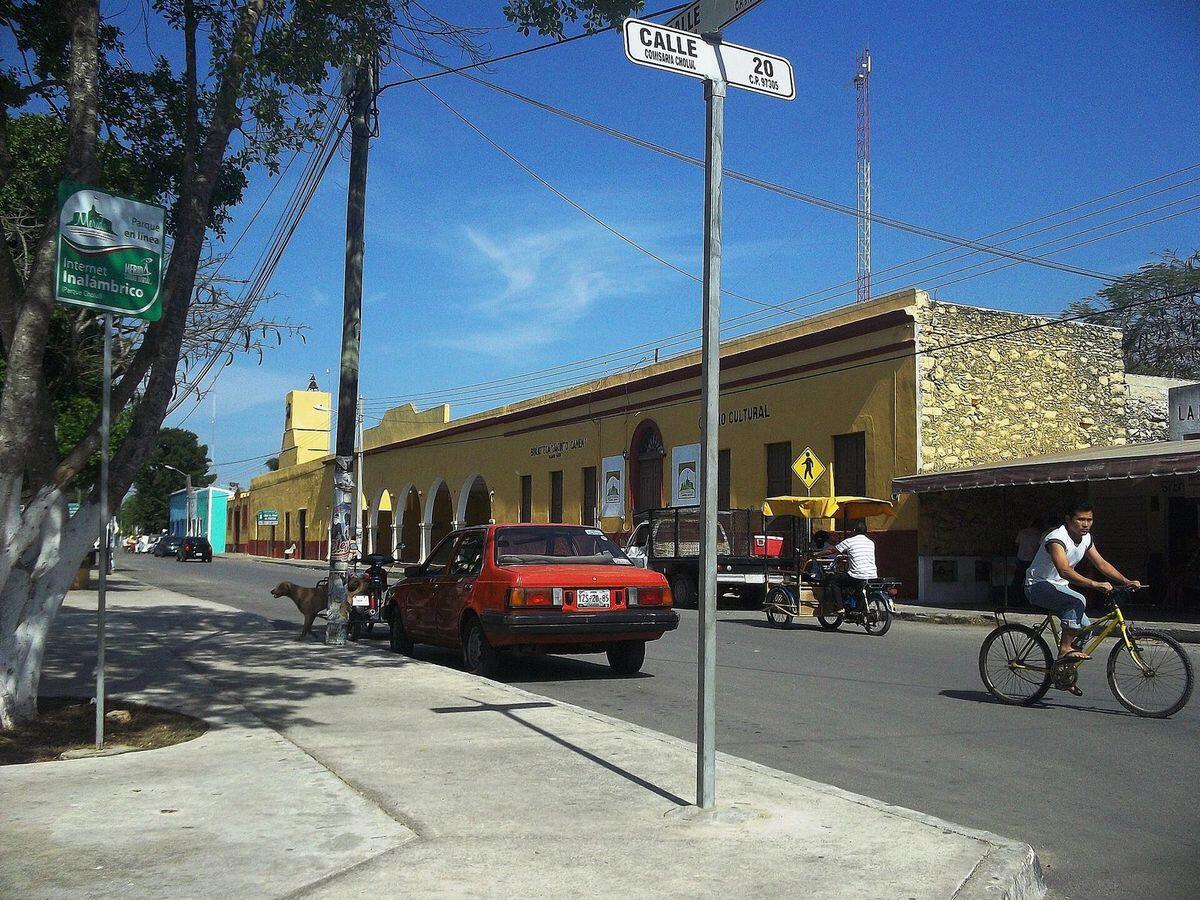
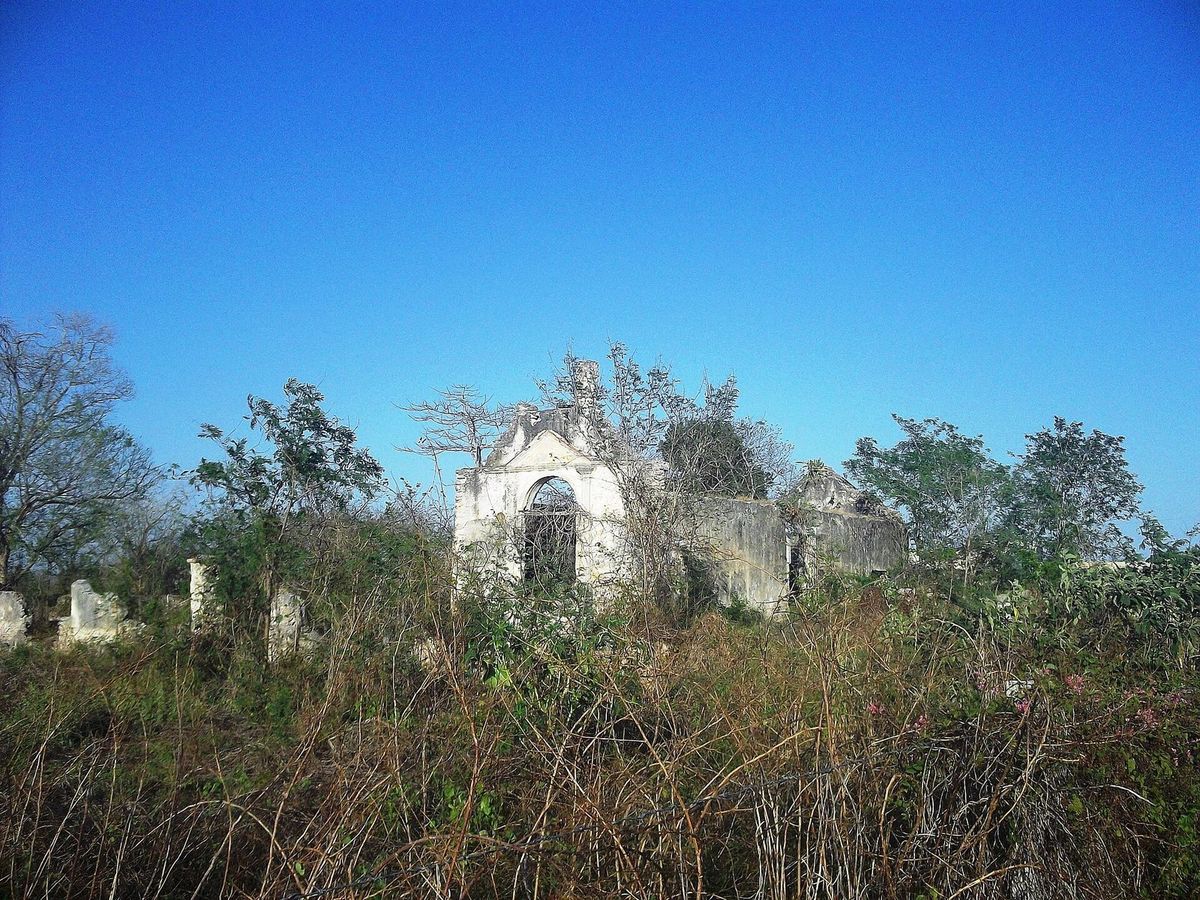
"Hacienda Cholul" can mean three places: the ruin below, a residential development called Privada Hacienda Cholul, or the hotel in Tixkokob. The ruin is the ex-hacienda Cancabchén de Casares, also spelled Kankabchén or Kancabchén, between Cholul and Sitpach, about 1.8 km east-southeast of the church.
What is documented: 1873
On 13 May 1873, in daylight, a group of servants killed the owner, retired colonel Manuel Rodríguez Solís, with axes. He lived alone there, and complaints of abuse had gone nowhere. Machuca reports that some of the men got 13 years at San Juan de Ulúa and others nearly seven in Mérida's jail; the case file is in Yucatán's state archive (Justicia penal, vol. 165, exp. 13, 1873-74). Yucatan Today (no. 418, 2022) corroborates the date, the victim and the daylight killing.
The legend
México Desconocido (undated) tells of an abused bride and a curse, and of a patrón with a devil's pact, killed with machetes. Yucatan Today reports the tradition that joins the crime to the curse: the dead man was called the devil, it is said, because local children began dying that same year.
Do not go in without permission. We could not confirm public access, an owner or legal status, and México Desconocido calls the place abandoned and deteriorated.
The ex-hacienda San Pedro Cholul appears in 2012 photos as a ruined main house and chapel, about 1.5 km southeast of the church. Access there is unconfirmed too.
Getting to Cholul by bus or car
As of 31 October 2026, ATY's route list still shows R55 Mérida-Cholul, and ATY announced R811 Mérida-Cholul-Tixcuytún to start on 12 October 2026, with a connection to the Mérida-Cholul route (Por Esto, 9 October). We could not confirm that it is running: R811 is not on ATY's list, and we cannot say how the two fit together or how often either comes. Check the Va-y-Ven app before you go.
| R55 | R811 (as announced) | |
|---|---|---|
| Passes | Centro (Calle 52 x 65 y 63), La Plancha, Itzimná, Altabrisa, Hospital Regional, Universidad Modelo, Cholul park, comisaría (Calle 21 x 16) | Centro, La Plancha, La Mejorada, Universidad Modelo, Uptown, Altabrisa, Plaza Fiesta, Cholul, Tixcuytún |
| Hours | 5 am to 11 pm daily at its June 2024 launch; not reconfirmed | Announced departures from Mérida: Mon-Fri 5 am to 9:20 pm; Sat last departure 8:10 pm; Sun 6:58 am to 6:34 pm (October 2026) |
| Ride to Cholul | No figure found | 52 minutes, 43 on Sunday |
The fare is MX$12, or MX$5 for students and seniors, with a half-price second trip and a free third within 120 minutes (POSTA, January 2026; Diario de Yucatán, October 2026). Pay by card or enabled device, and assume no cash. We could not confirm a combi or a taxi fare. More options are in Mérida without a car.
By car it is about 12 km from the Plaza Grande: 15 minutes with no traffic on our OSRM estimate, "about 20" per POSTA (June 2025), longer at school and commute hours. Head northeast on avenida 7 / República de Corea, past Altabrisa and across the Periférico, onto the old Cholul road. From the airport it is 19.3 km, about 23 minutes without traffic.
Living in Cholul: pros and cons
Cholul suits families following the north school corridor and people who drive daily to Altabrisa, Universidad Modelo or the hospitals just inside the Periférico. It suits walkers, cyclists and bus-dependent commuters less.
Pros
- A school corridor. The state's 2023-24 scholarship catalogue lists seven private schools in Cholul, and that list is partial.
- An old center with a plaza and a market close to the privadas.
Cons
- In most privadas you will need a car. Our north guide says to plan on at least one per household.
- Narrow streets, often without sidewalks. Neighbors have complained of speeding and unsafe school routes (La Jornada Maya, 2017 and 2023).
- Power cuts, and water that depends on your address.
- Steady construction. Diario de Yucatán reported at least four residential permit requests in 2025, one for 74 units on 1 ha (15 July 2025).
Neighbors push back. In April 2026 seven maculí trees were felled without permits for a gas station on the old Cholul road. The works were closed, and about ten people protested on 11 May (Diario de Yucatán, 24 April; Por Esto, 11 May).
Before you sign
- Ask who supplies water at that address and whether the house relies on a pump.
- Ask neighbors about the 2026 power cuts.
- Confirm whether the house has a septic tank.
- Drive your route at 7:15 am on a school day.
- Check the developer with Profeco, and read buying property in Mérida.
We print no rents or prices per m²: what we found was listings and old press notes.
Water, power and traffic
San Pedro Cholul lost power from about 9 pm on 3 April 2026 and still had none at noon on the 4th (Diario de Yucatán, 4 April). Neighbors reported cuts on 6, 7 and 8 May, and CFE cited preventive maintenance (Diario de Yucatán, 8 May 2026). Voltage was already a complaint in May 2023, when 83 neighbors wrote about damaged appliances and pumps (La Jornada Maya). For rates and the DAC tariff, see electricity and CFE.
Water depends on the address. The city runs four systems in Cholul (Por Esto, 21 January 2026), and Japay also lists a San Pedro Cholul system, which went down with the April outage (Diario de Yucatán, 4 April 2026). Also read whether Mérida's tap water is safe.
The sewer is the next thing to check: in Yucatán the census term "drenaje" usually means a septic tank (Rodríguez Pavón, 2011).
POSTA put Periférico peaks at 6-9 am, 1-3 pm and 6-9 pm, with Cholul among the heaviest morning zones (15 January 2025).
Schools the state lists in Cholul
Among the private schools SEGEY lists in Cholul in its 2023-24 scholarship catalogue (PDF dated May 2023) are Instituto Moderno Americano, Preparatoria CELA, Smartium International School, Comunidad Educativa Alianz Los Pinos and Colegio Ángelus. All five had live websites on 31 October 2026, though that does not prove the catalogue address. It also lists Centro de Educación Integral Monarca and Preparatoria Ibero Mérida, which we could not confirm.
The catalogue covers only schools in the scholarship scheme. It puts Instituto Arrayanes and Ágora in Temozón Norte. For choosing, see schools and families in Mérida.
Safety: what the numbers can tell you
We found no crime figure for Cholul, because SESNSP publishes by municipality, so these numbers cannot say how safe it is. For all of Mérida municipality, a third-party copy of SESNSP data (elcri.men) shows 3,134 case files in 2025, including 286 robberies and 73 home burglaries, against 2,003, 230 and 39 in 2024. Those are registered cases, and the 2025 rise may reflect reporting as well as crime.
In INEGI's September 2026 ENSU survey, 34.0% of Mérida adults felt unsafe (38.2% in June), against 58.1% nationally. More on our crime statistics page.
Climate
SMN normals for 1991-2020, from a station about 9 km from Cholul, give a January high of 30.1 °C (86 °F) and low of 17.6 °C (64 °F), and a May high of 37.0 °C (99 °F). September is wettest, at 158.5 mm.
In hurricane season, long outages hit harder where water depends on a pump: see our hurricane guide.
Frequently asked questions
Is Cholul part of Mérida?
Yes. It is a comisaría of the municipality of Mérida, just outside the Periférico ring road, with postal code 97305.
How many people live in Cholul?
11,745 in the 2020 census, nearly double the 2010 count. That is the INEGI locality only, and we found no newer figure.
How far is Cholul from downtown Mérida?
About 12 km by road: 15-20 minutes without traffic (estimate), longer at school and commute hours. The R811 timetable announced in October 2026 gives 52 minutes on weekdays.
Can I get to Cholul by bus?
As of 31 October 2026, ATY's route list shows R55 Mérida-Cholul, and ATY announced R811 Mérida-Cholul-Tixcuytún to start on 12 October 2026. The fare is MX$12 by card (October 2026), with discounted transfers. Check the Va-y-Ven app before you go.
Is Hacienda San José Cholul in Cholul?
No. That hotel is in Tixkokob, about 35 km east of Mérida in a straight line.
What does Cholul mean?
Colonial Maya texts write the name as Chulul. In David Bolles's concordance, dictionaries of the period record it as a strong tree used for bows, as heartwood, and as the bow itself. The popular "wood in the water" is not in those entries, and no source says why the town took the name.
Do I need a car to live in Cholul?
In most privadas, yes in practice. Streets are often narrow without sidewalks, and our north guide advises at least one car per household.
Are water and power reliable?
It varies by address. Residents reported repeated power cuts in 2026, and water supply depends on which local system serves the house, so ask before you sign.
What is there to see in Cholul?
Above all, the church of San Pedro Apóstol and its colonial murals, with the Coronation of the Virgin above the main arch. There is also the park, the market and hacienda ruins with no confirmed public access. Check church hours before you go.
How we reported this
This guide was compiled without a site visit, from official data (ATY, SEGEY, SMN and INEGI, with census counts through republishers), two articles in the journal Península (2011), David Bolles's Maya concordance, local press and specialist sources. Facts were checked on 31 October 2026. Still to confirm on the ground: whether R811 is running and how it fits with R55, church hours and access to the murals, access to the haciendas, 2026 and 2027 fiesta dates, which restaurants are open, and peak-hour drive times. Crime counts come from a third-party copy of SESNSP data (elcri.men), and the photos date from 2012 to 2016. Spotted something out of date? Tell us.
- ATY: R55 Mérida-Cholul route sheet (read 31 Oct 2026)
- ATY: route index (read 31 Oct 2026; R55 listed, R811 not)
- Diario de Yucatán: R811 announcement, route, date and fares (9 Oct 2026, updated 11 Oct)
- Por Esto: R811 announcement, with a connection to the Mérida-Cholul route (9 Oct 2026)
- Tinta Pública Noticias: unsigned note saying R811 started (13 Oct 2026; not confirmed by ATY's route index on 31 Oct)
- INEGI: ENSU results for September 2026 (Comunicado 101/26, 23 Oct 2026)
- CityPopulation: Cholul 310500084, INEGI series 2000-2020
- SMN-Conagua: climate normals 1991-2020, station 31036 C.I.C.Y.
- SEGEY: Catálogo de Escuelas Participantes, 2023-2024 school year (May 2023)
- SESNSP municipal crime counts, third-party copy by elcri.men
- Laura Machuca Gallegos: En los márgenes de Mérida, de la época colonial a 1917 (Península, 2011)
- Jimena Rodríguez Pavón: Conurbación, cambio sociocultural e identidad comunitaria en la periferia de la ciudad de Mérida: el caso de Cholul (Península, 2011)
- David Bolles: Combined Dictionary-Concordance of the Yucatecan Mayan Language (FAMSI)
- Diario de Yucatán, 100 Treasures: the murals in the church of St Peter the Apostle in Cholul (undated)
- Richard D. Perry, Mexico's Murals: The Cholul murals (3 Dec 2018)
- Yucatan Today no. 418 (2022): the legend of Cancabchén Casares
- Yucatán Magazine: Cholul, the small pueblo in northern Mérida (17 Sep 2021)
- Diario de Yucatán: no water or power in a sector of north Mérida (4 Apr 2026)
- Diario de Yucatán: power cuts reported in north Mérida (8 May 2026)
Get the monthly Mérida brief
Once a month: what changed in the city, with sources. No spam, and you can leave any time.
- What changed in the city
- Figures with their source
- One email a month
Keep exploring
North Mérida: Temozón, Cholul, Altabrisa & the Privadas
Where the city's malls, private hospitals and international schools sit, from Montebello and Campestre out to the new-build belt in Conkal, and why every errand there needs a car.
Read guide →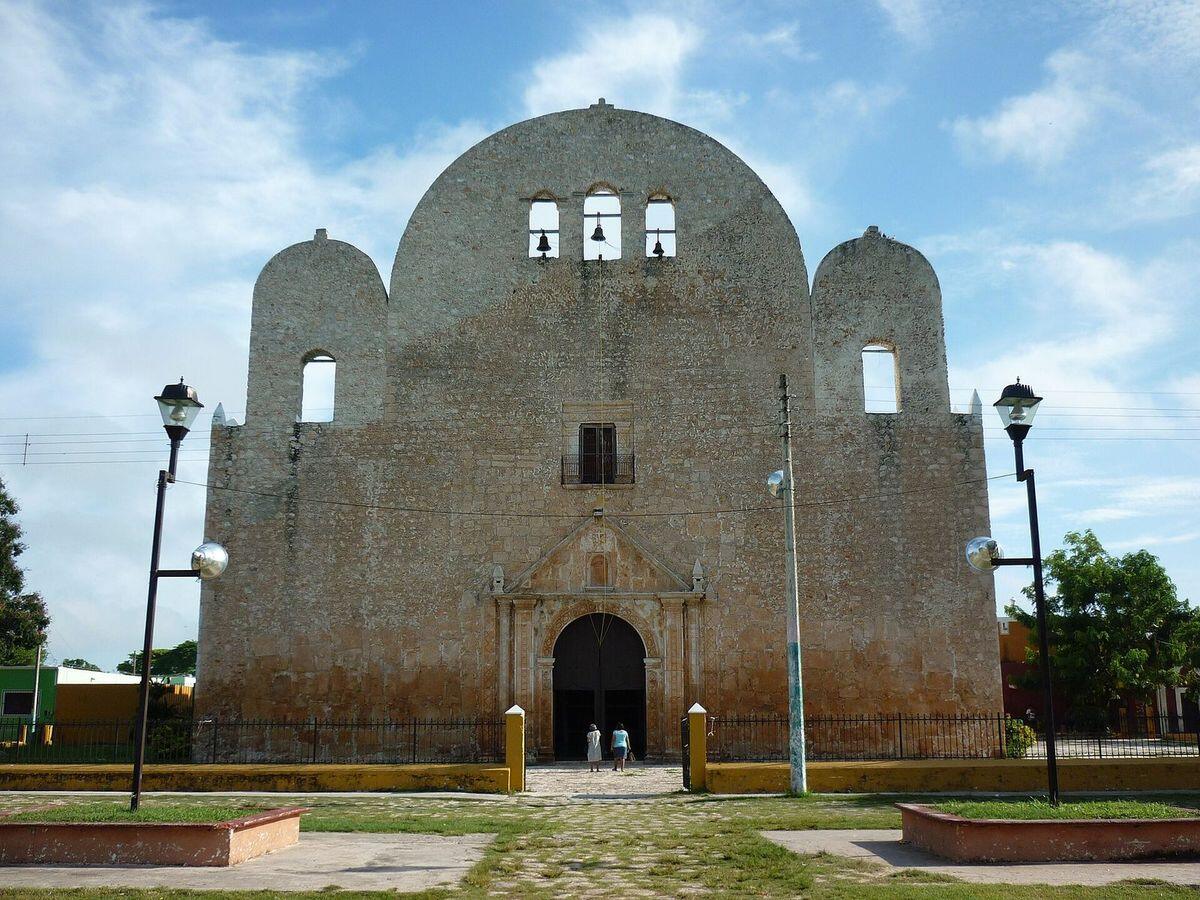
Conkal, Yucatán: the Separate Town Northeast of Mérida
What changes when your cédula says Conkal, who is moving in and how to get there without a car. Checked 31 October 2026.
Read guide →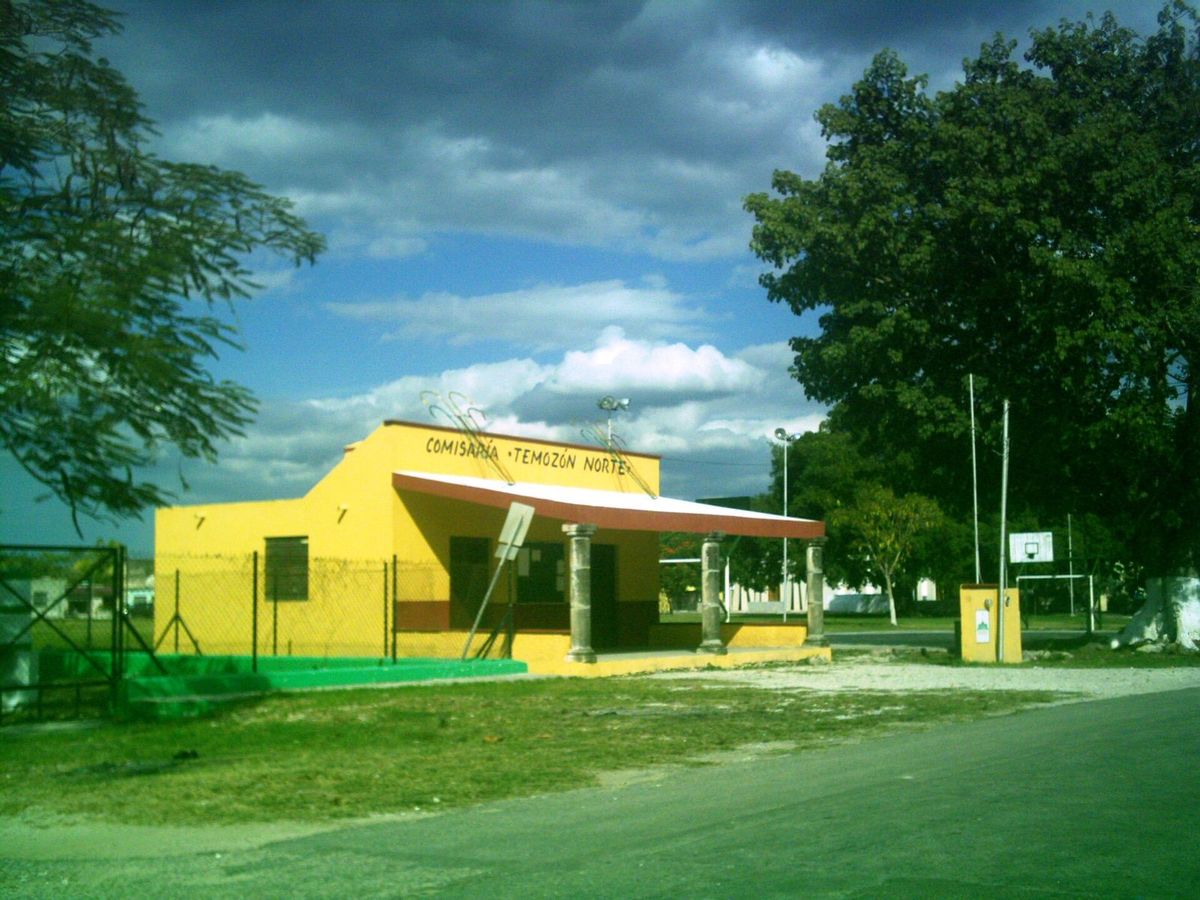
Around Mérida: which town is in which municipality
A place-by-place table with rank, distance, population and bus route, plus the property tax rule and what the Periférico does not decide. Checked on 31 October 2026.
Read guide →
Mérida With Kids: Schools & Family Life
Private, bilingual and international-program tuition, the apostilled papers a child needs to enroll, UADY and other universities, the north's privada belt, and the heat and Spanish adjustment.
Read guide →
Buying Property in Mérida as a Foreigner
The process is safe and well-trodden once you understand the fideicomiso, the notario's role, the closing costs and the due-diligence checks to run before any money moves.
Read guide →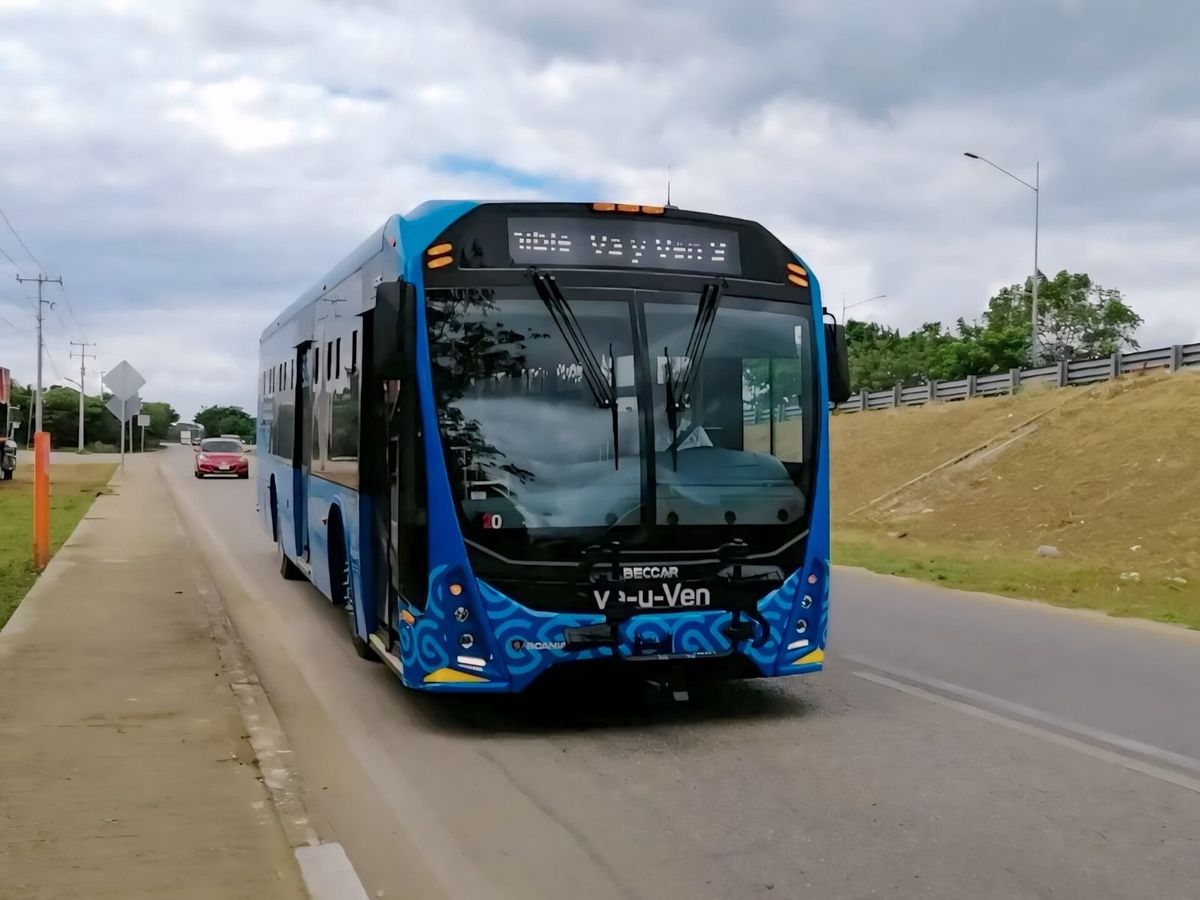
Living in Mérida Without a Car: What Works
Centro's walkable grid, Va y Ven buses, the Ie-Tram, Uber and DiDi fares, and the April-to-June heat that moves errands to mornings and evenings are all covered here.
Read guide →